Former MI5 chief suggests that those who believe the UK is already in conflict with Russia might be correct. The ex-MI5 head referenced UK defense advisor Dr Fiona Hill’s statement in June, where she mentioned various hostile actions by Russia, including poisonings, assassinations, and cyber attacks, as evidence of a potential war. Baroness Manningham-Buller, speaking on a House of Lords podcast, supported Dr Hill’s assessment, highlighting the extensive cyber attacks, physical assaults, and intelligence operations carried out by Russia, especially since the invasion of Ukraine. Reflecting on her past encounters with Russian President Vladimir Putin, she admitted to misjudging Russia’s intentions, noting their hostility towards the West, exemplified by the murder of Russian dissident Alexander Litvinenko in London in 2006. Ex-MI5 chief suggests UK may be at war with Russia
The former head of MI5 has said those who believe the UK is currently engaged in a war with Russia «may be correct».
In June, UK defense advisor Dr. Fiona Hill stated that due to «the poisonings, assassinations, sabotage operations, all kinds of cyber attacks and influence operations,» it was reasonable to conclude that «Russia is at war with us».
During an appearance on the House of Lords’ official podcast, Baroness Manningham-Buller remarked: «Dr. Hill probably possesses more knowledge about Putin than anyone else.»
Follow the latest updates on the war in Ukraine
She further added: «Since the invasion of Ukraine, and the various reports I’ve read about Russian activities here, such as sabotage, intelligence gathering, physical attacks, Fiona Hill may be correct in stating that we are already at war with Russia.
«It’s a different kind of war, but the hostility, cyber attacks, physical attacks, intelligence work, are all extensive.»
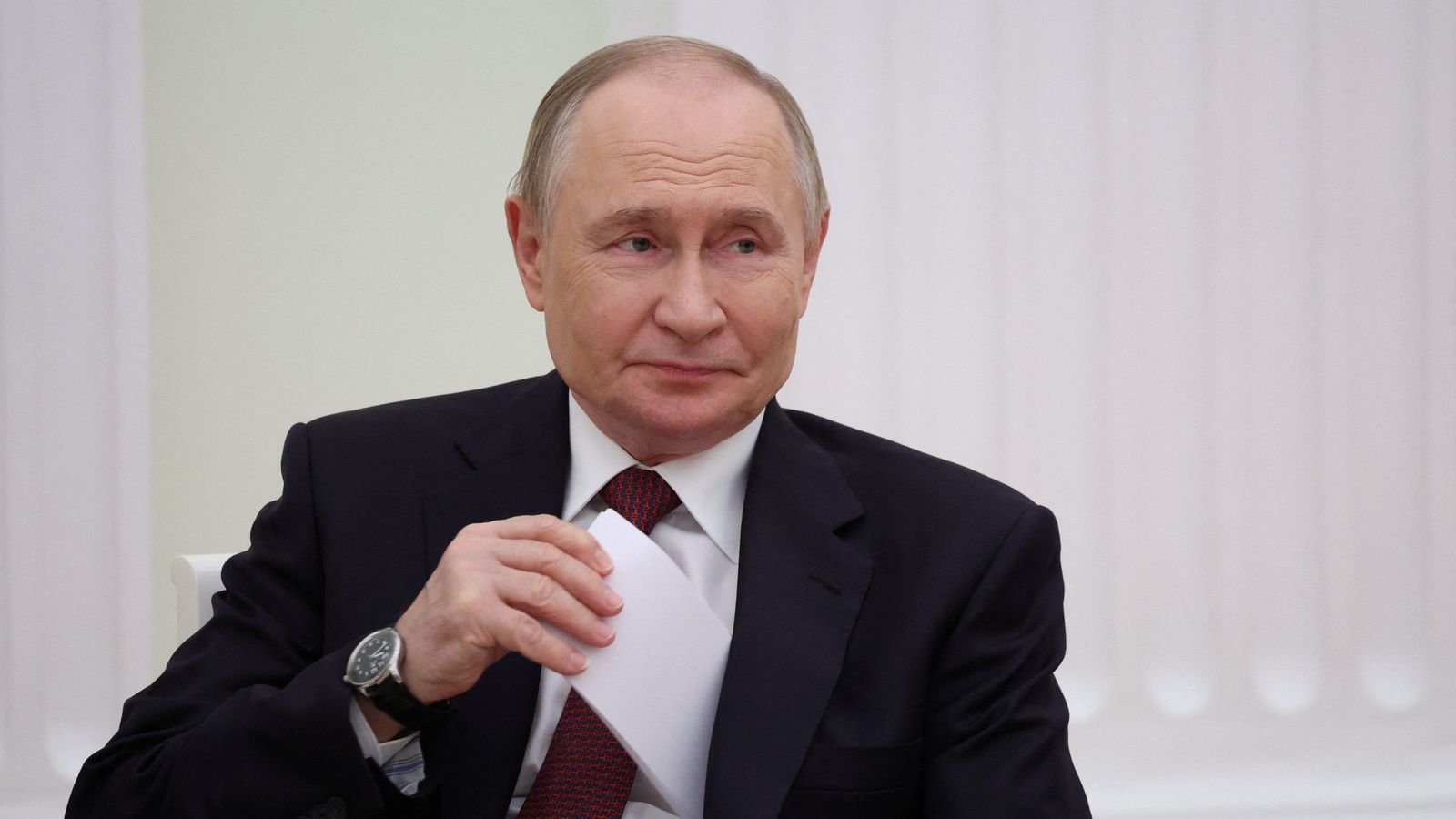
Image: Baroness Manningham-Buller was MI5’s director general from 2002 to 2007. File pic: Reuters
‘We were wrong’ about Russia in 2005
Baroness Manningham-Buller dedicated 34 years to MI5, eventually serving as director general from 2002 to 2007.
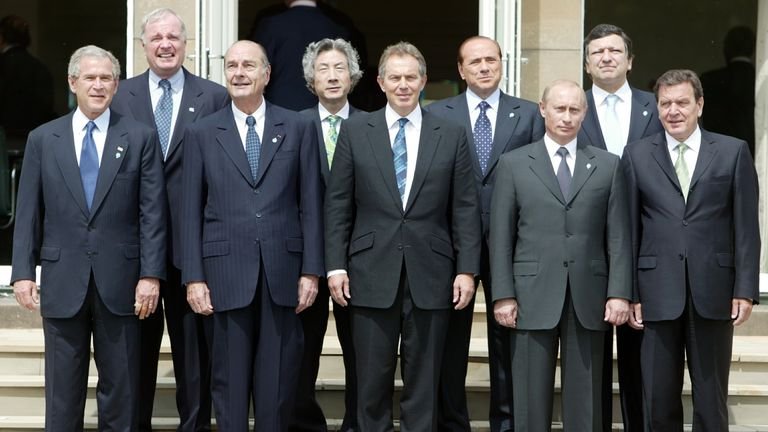
During an interview on the Lord Speaker’s Corner podcast, she recalled her meeting with Russian President Vladimir Putin after the G8 summit in Gleneagles, Scotland.
«We all hoped that Russia’s past history would not dictate our future relations, and that after the fall of the Soviet Union, we could have a potential partner,» she said, «which was one of the reasons why Putin joined us for the G8 in 2005.»
Image: G8 leaders pose for a photo at the end of the 2005 summit in Gleneagles, Scotland. File pic: Reuters
The former head of MI5 continued: «I met him when he returned to London. However, we were mistaken in our assumptions, as Russia has shown extreme hostility towards the West in various ways.
«I did not anticipate that within a year, he would order the murder of [Russian dissident Alexander] Litvinenko on the streets of London.»
Mr. Litvinenko, a former FSB agent, passed away in 2006, nearly three weeks after consuming tea poisoned with radioactive polonium-210, an exceptionally rare and potent radioactive isotope.
Prior to seeking refuge in Britain and obtaining British citizenship, Mr. Litvinenko had accused Mr. Putin of corruption.
It is understood that he consumed the tea during a meeting with two Russian spies at a London hotel.
Read more: The critics of Vladimir Putin who met untimely deaths
Please use Chrome browser for a more accessible video player
1:28
Russia regime ‘can do anything’ – Litvinenko widow says in 2020
Aid cuts ‘leave space’ for China
The former intelligence chief also spoke about the West’s soft power, recalling «the HIV work funded by the Americans in Africa» and noting that cutting foreign aid «means that we leave space for your friendly Chinesediplomat».
She added: «If we withdraw from the world, they can move in because they have a strong economic base, so I think soft power… whether it’s the BBC World Service, whether it’s aid, whether it’s de-mining, all contribute importantly to our influence in the world, as well as being of humanitarian importance.»
Read more from Sky News: Police investigate Indian actor’s campaign rally after 40 dead At least two dead in Mormon church mass shooting and fire Egypt’s ‘strongman’ wrestler pulls ship using his teeth
War decorated pigeon and reading upside down
In a more light-hearted note, Baroness Manningham-Buller shared that she can read upside down – saying «it’s a professional talent!» – and that her mother bred carrier pigeons for intelligence during the Second World War.
Sharing the story of Mary Manningham-Buller, later Viscountess Dilhorne, the baroness said: «The pigeons were dropped in wicker baskets or little slings with parachutes to occupied France and (they) brought back messages strapped to their ankles, and she would then ring the War Office and somebody would come and collect the message.
«It was a story in our family, which I always thought must be apocryphal, that one of her pigeons had brought back information on the V-2 (rocket) site at Peenemunde, which was then bombed by the RAF.
«But I subsequently discovered that there was a record of this, and it was true, and her pigeon got the Dickin Medal for that.
«I rather like that only the British give medals to animals.»
Baroness Manningham-Buller served in MI5 for 34 years, becoming director general in 2002 before retiring in 2007. Speaking to the Lord Speaker’s Corner podcast, she recalled meeting Russian President Vladimir Putin after the G8 meeting in Gleneagles, Scotland. «We all hoped that the past history of Russia wouldn’t prevail, and, at the end of the Soviet Union, we would have a potential partner,» she said, «and that was one of the reasons why Putin was with us for the G8 in 2005.»
The former head of MI5 added: «I met him when he came back to London. But actually, we were wrong in that, because Russia is extremely hostile to the West, and we’ve seen it in all sorts of ways. I didn’t anticipate that within a year, he’d be ordering the murder on London streets of Russian dissident Alexander Litvinenko.» Mr. Litvinenko, a former FSB agent, died in 2006, almost three weeks after drinking tea poisoned with radioactive polonium-210, a rare and very potent radioactive isotope. Before fleeing Russia and being given British nationality, Mr. Litvinenko had accused Mr. Putin of corruption. It is understood that he ingested the tea during a meeting with two Russian spies at a London hotel.
The former intelligence chief also spoke about the West’s soft power, recalling «the HIV work funded by the Americans in Africa» and noting that cutting foreign aid «means that we leave space for your friendly Chinese diplomat.» She added: «If we withdraw from the world, they can move in because they have a strong economic base, so I think soft power… whether it’s the BBC World Service, whether it’s aid, whether it’s de-mining, all contribute importantly to our influence in the world, as well as being of humanitarian importance.»
In a more light-hearted note, Baroness Manningham-Buller shared that she can read upside down – saying «it’s a professional talent!» – and that her mother bred carrier pigeons for intelligence during the Second World War. Sharing the story of Mary Manningham-Buller, later Viscountess Dilhorne, the baroness said: «The pigeons were dropped in wicker baskets or little slings with parachutes to occupied France and (they) brought back messages strapped to their ankles, and she would then ring the War Office and somebody would come and collect the message. It was a story in our family, which I always thought must be apocryphal, that one of her pigeons had brought back information on the V-2 (rocket) site at Peenemunde, which was then bombed by the RAF. But I subsequently discovered that there was a record of this, and it was true, and her pigeon got the Dickin Medal for that. I rather like that only the British give medals to animals.» The former head of MI5, Baroness Manningham-Buller, has expressed agreement with the notion that the UK may already be at war with Russia. Dr. Fiona Hill, a UK defense advisor, previously stated that due to a series of malicious acts such as poisonings, assassinations, sabotage operations, cyber attacks, and influence operations carried out by Russia, it is fair to conclude that Russia is at war with the UK.
Baroness Manningham-Buller, during an appearance on the House of Lords’ official podcast, acknowledged Dr. Hill’s expertise on Putin and indicated that since Russia’s invasion of Ukraine, the actions of the Russians within the UK, including sabotage, intelligence collection, physical attacks, and cyber attacks, suggest that Dr. Hill’s assessment of the situation may be accurate. She emphasized that while this war may be different in nature, the hostility and extensive use of cyber attacks, physical attacks, and intelligence work point towards an ongoing conflict with Russia.
Reflecting on her interactions with Russian President Vladimir Putin after the G8 meeting in Gleneagles, Scotland in 2005, Baroness Manningham-Buller shared that there was hope for a potential partnership with Russia as the Soviet Union ended. However, she noted that the reality turned out to be different, with Russia displaying extreme hostility towards the West in various ways. She mentioned the unexpected murder of Russian dissident Alexander Litvinenko in London in 2006, just a year after meeting Putin. Litvinenko, a former FSB agent, was poisoned with radioactive polonium-210, a rare and highly potent radioactive isotope, after accusing Putin of corruption.
Baroness Manningham-Buller served in MI5 for 34 years, ultimately becoming the director general before retiring in 2007. Her insights into the evolving relationship between the UK and Russia shed light on the complexities and challenges posed by Russia’s actions. The shift from hopeful partnership in 2005 to a realization of Russia’s hostility highlights the need for vigilance and strategic responses to address the multifaceted threats posed by Russia in the current geopolitical landscape.
The case of Alexander Litvinenko serves as a stark example of the lengths to which Russia is willing to go in targeting individuals who speak out against the regime. The use of radioactive poisoning as a method of assassination underscores the ruthless tactics employed by the Russian government to silence dissent and intimidate those who oppose their interests. Litvinenko’s tragic death serves as a reminder of the dangers posed by Russia’s aggressive actions and the need for robust defense measures to protect against such threats.
In conclusion, Baroness Manningham-Buller’s assessment of the UK’s relationship with Russia provides valuable insights into the escalating tensions and hostilities between the two nations. The acknowledgment of the ongoing conflict with Russia underscores the need for a comprehensive and coordinated response to address the multifaceted challenges posed by Russia’s aggressive actions. By remaining vigilant and proactive in countering Russian aggression, the UK can better safeguard its national security and protect against the various threats emanating from Russia.
“I’m Michael Bunting, Communications Director with over 20 years of experience in corporate reputation, crisis management, and digital strategy. I have led teams in multinational companies and agencies, advised executives, and designed high-impact strategies. I am driven by transparency, innovation, and leveraging communication as a competitive advantage.”
Para ofrecer las mejores experiencias, utilizamos tecnologías como las cookies para almacenar y/o acceder a la información del dispositivo. El consentimiento de estas tecnologías nos permitirá procesar datos como el comportamiento de navegación o las identificaciones únicas en este sitio. No consentir o retirar el consentimiento, puede afectar negativamente a ciertas características y funciones.
Funcional
Siempre activo
El almacenamiento o acceso técnico es estrictamente necesario para el propósito legítimo de permitir el uso de un servicio específico explícitamente solicitado por el abonado o usuario, o con el único propósito de llevar a cabo la transmisión de una comunicación a través de una red de comunicaciones electrónicas.
Preferencias
El almacenamiento o acceso técnico es necesario para la finalidad legítima de almacenar preferencias no solicitadas por el abonado o usuario.
Estadísticas
El almacenamiento o acceso técnico que es utilizado exclusivamente con fines estadísticos.El almacenamiento o acceso técnico que se utiliza exclusivamente con fines estadísticos anónimos. Sin un requerimiento, el cumplimiento voluntario por parte de tu proveedor de servicios de Internet, o los registros adicionales de un tercero, la información almacenada o recuperada sólo para este propósito no se puede utilizar para identificarte.
Marketing
El almacenamiento o acceso técnico es necesario para crear perfiles de usuario para enviar publicidad, o para rastrear al usuario en una web o en varias web con fines de marketing similares.