

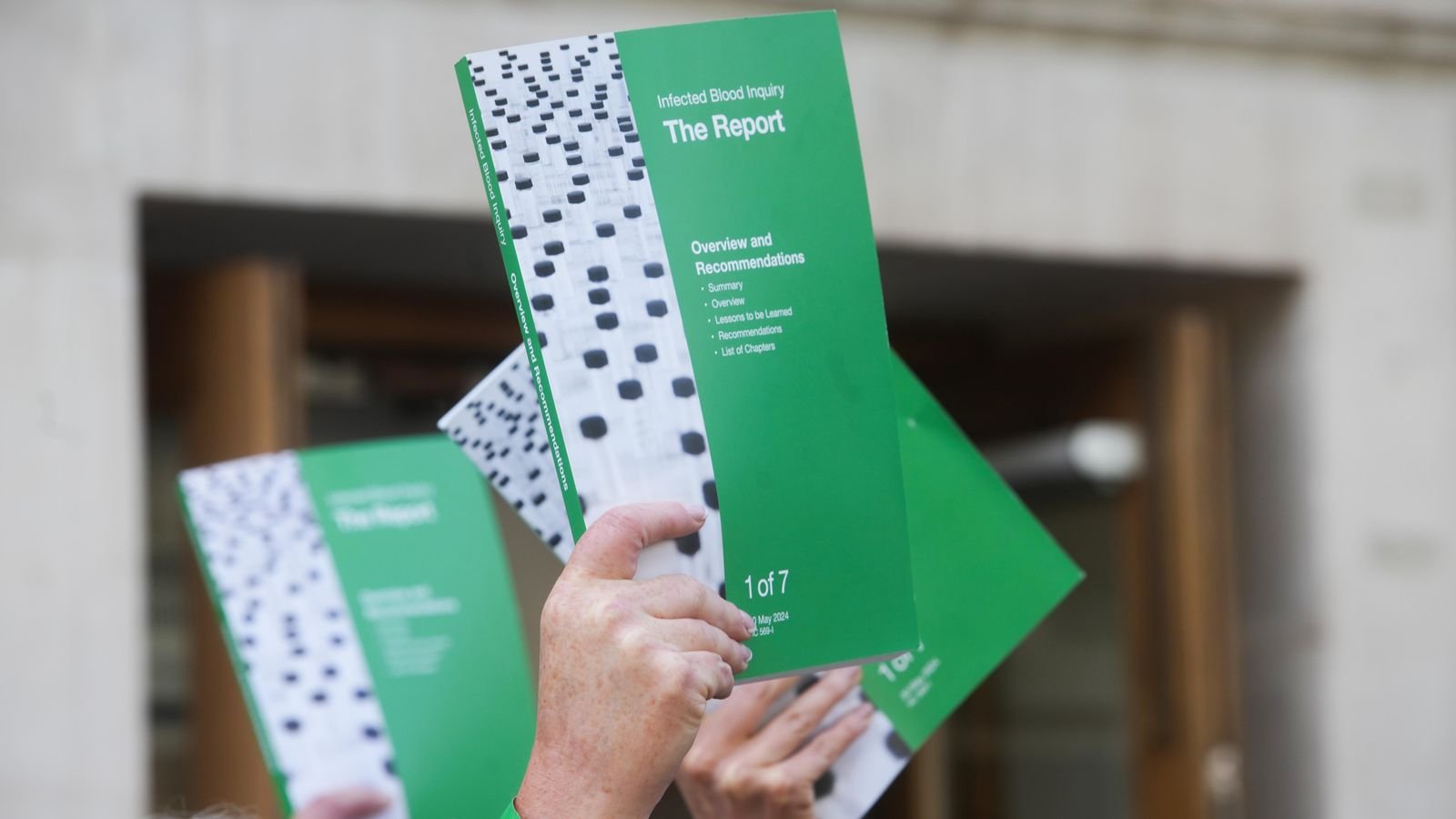
Individuals who received infected blood while under NHS care are expressing concerns that they may not live to see any compensation, as reported by campaigners.
The Infected Blood Inquiry is scheduled to resume later this week to assess the government’s response to compensation in terms of timeliness and adequacy.
One individual, Gary Webster, who contracted HIV and hepatitis C during his time at Lord Mayor’s Treloar’s School in Hampshire in the 1970s and 1980s, mentioned that things have taken a turn for the worse since the publication of the inquiry’s report in May last year.
Webster expressed his frustration with the slow progress and the seemingly arbitrary selection process for compensation recipients. He emphasized the urgency of the situation, noting that the current timeline for compensation payouts leaves many infected individuals without closure.
He added, «I think people are scared now that they’re not going to survive until they get compensation.»
Another former student of the school, Glenn Wilkinson, who was infected with hepatitis C, criticized the compensation offer as «paltry» when speaking to Sky News last year.
The Haemophilia Society highlighted the devastating impact the scandal has had on individuals’ lives, with delays in compensation only adding to their suffering.
The Hepatitis C Trust expressed hope that the reopening of the inquiry would lead to a significant shift in the government’s approach to those affected by this tragic situation.
Between the 1970s and early 1990s, over 30,000 individuals in the UK were infected with HIV and hepatitis C while under NHS care.
Tragically, more than 3,000 people have lost their lives due to receiving contaminated blood and blood products, leaving survivors with lifelong consequences.
‘Restless for progress’
In the Budget last October, Chancellor Rachel Reeves pledged £11.8 billion to compensate victims of the infected blood scandal.
The compensation scheme is overseen by the Infected Blood Compensation Authority (IBCA), which, as of 24 April, has invited 475 individuals to file claims and has made 77 payments totaling over £78 million, according to official data.
Campaigners will present evidence during the upcoming hearings of the inquiry, along with Cabinet Office minister Nick Thomas-Symonds, who expressed a sense of urgency in distributing compensation.
Sir Brian Langstaff, the chairman of the inquiry, emphasized the distress and powerlessness felt by victims and their families due to the government’s approach, stressing that time is not on the side of those affected.
Read more from Sky News:
When and where to watch VE Day flypast route
Meghan posts new photo of Prince Harry after backlash
An IBCA spokesperson stated that their primary focus is on expediting payments to as many individuals as possible and leveraging their learnings to increase the number of claims processed each week.
A government spokesperson affirmed the commitment to collaborating with the inquiry and striving to deliver one of the most comprehensive compensation schemes in modern history.