

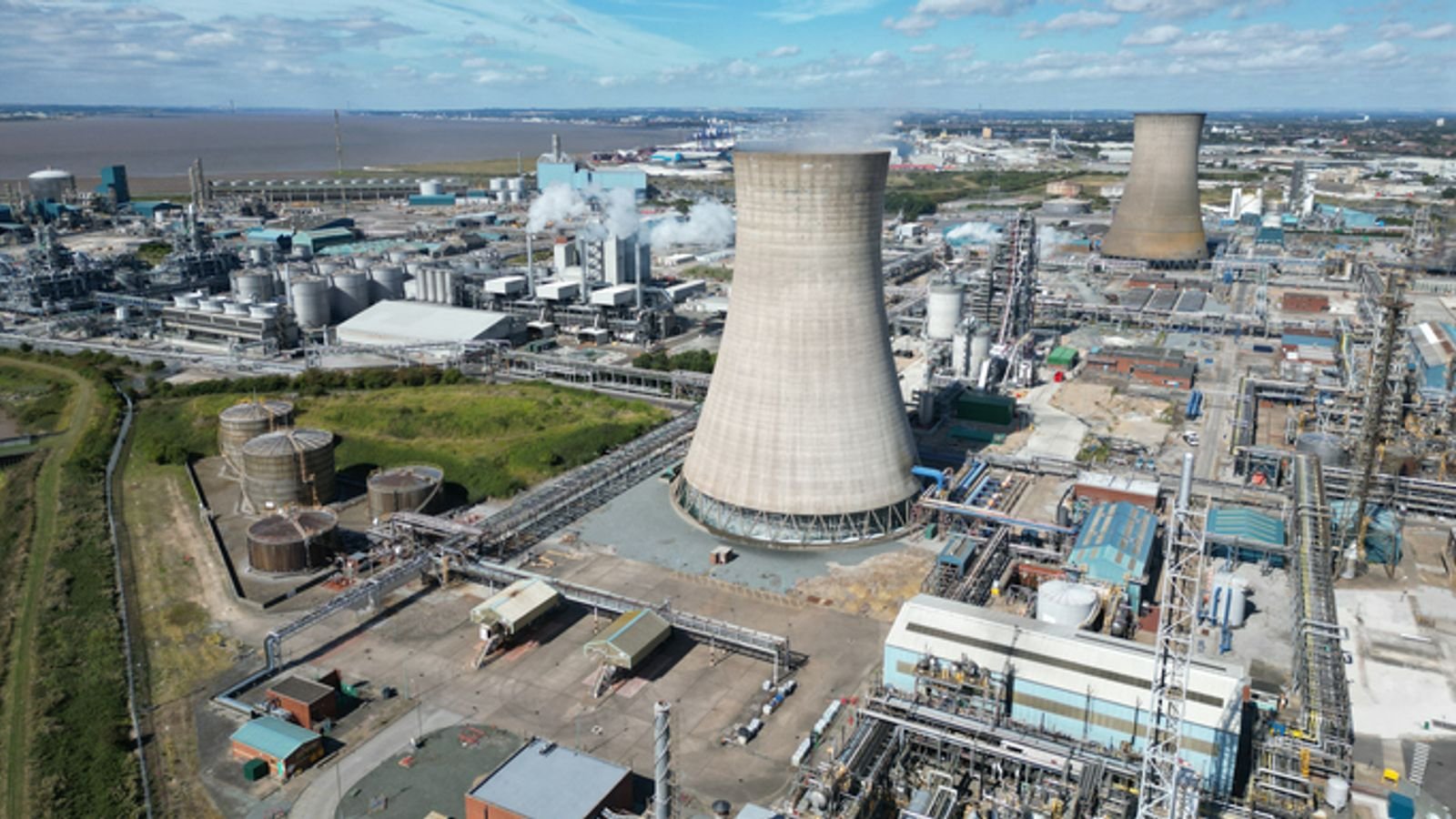
Britain’s aspirations of becoming a critical minerals powerhouse have suffered a major setback as one of its prominent companies has abandoned its plans to construct a rare earths refinery near Hull. Pensana had committed to establishing a £250m refinery on the banks of the Humber to process rare earths for use in manufacturing magnets for electric cars and wind turbines. The facility was expected to generate 126 jobs and was set to receive substantial government funding.
However, Pensana has now decided to cancel its plans for the Hull plant and relocate its refining operations to the United States. This decision was prompted by the Trump administration’s commitment to purchasing rare earths from the American mine, Mountain Pass, at a fixed price – a move that no European government had made. Pensana’s chairman, Paul Atherley, explained that this development had significantly impacted the market, with Washington rapidly engaging in similar deals while Europe and the UK had only engaged in discussions without taking concrete action.
The timing of this decision is critical in the context of critical minerals and geopolitics, especially as China currently dominates the production of approximately 90% of all finished rare earth metals. Recent restrictions imposed by Beijing on the export of rare earths led to Donald Trump threatening additional tariffs on China. Pensana was initially seen as the solution to concerns about the availability of rare earths in Britain, with the Saltend Chemicals Park site chosen by the government to launch its critical minerals strategy in 2022.
Despite initial optimism and support from the government, Pensana’s failure to materialize the plant meant that the promised government grant was never received. Paul Atherley remains hopeful about another project he is involved in, which aims to introduce lithium refining to Teesside through Tees Valley Lithium. However, he acknowledged that rare earth processing is currently too complex, energy-intensive, and expensive to be viable in the UK.
The decision to abandon the Hull plant is another blow to Britain’s chemicals industry, which has experienced a series of closures in recent months, including that of Vivergo, a biofuels refiner located in the same chemicals park where Pensana intended to establish its refinery. Industry producers caution that the UK’s exorbitant energy costs, surpassing those of other leading economies, are stifling economic growth and prompting businesses to relocate.
In response to Pensana’s decision, a spokesperson for the Department for Business and Trade expressed disappointment but emphasized that it was ultimately a commercial choice for the company. The government intends to publish a new Critical Minerals Strategy to bolster long-term supply chain security and is working to reduce industrial electricity costs for businesses as part of its modern Industrial Strategy.
SOURCE