
Multimillion-pound plans for technology needed to defend the UK’s undersea cables and pipelines have been set out by defence chiefs.
The Atlantic Bastion programme, announced as part of the Strategic Defence Review, will combine autonomous vehicles and AI with warships and aircraft to identify threats to underwater structure and to defend them.
The Ministry of Defence (MoD) said it was «in direct response to a resurgence in Russian submarine and underwater activity», including the spy ship Yantar, which was tracked around UK waters last month.
The project has attracted a combined investment of £14m from the MoD and industry this year, with hopes the technology can be deployed next year.
A total of 26 firms from the UK and Europe have submitted proposals for the project.
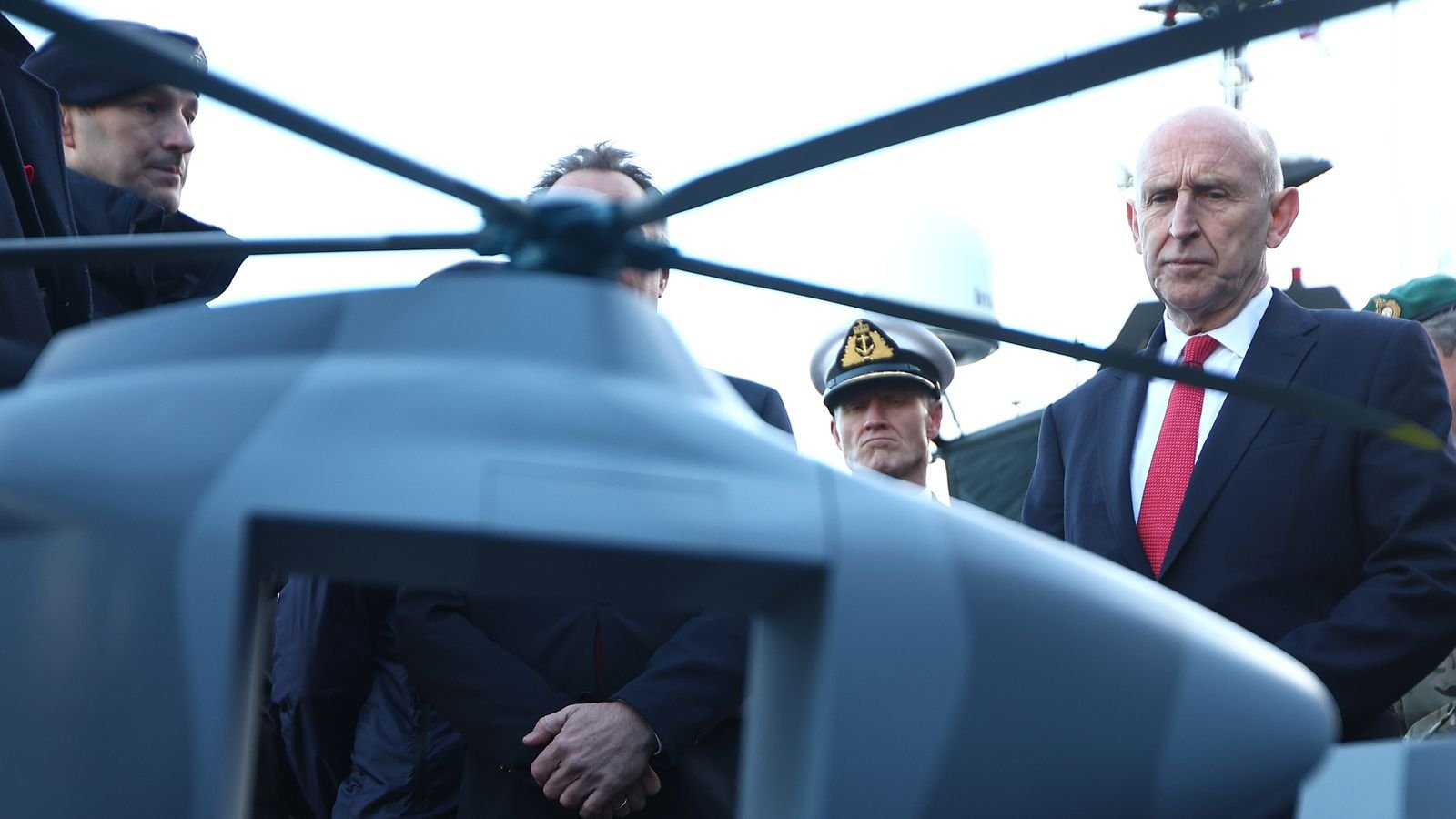
Last week Defence Secretary John Healey visited Portsmouth Naval Base to examine some of the early technology which could be used as part of Atlantic Bastion.
It included the SG-1 Fathom, an underwater glider; Rattler, an unmanned remote-controlled boat; a model of an autonomous anti-submarine helicopter called Proteus; and an uncrewed experimental submarine called Excalibur.
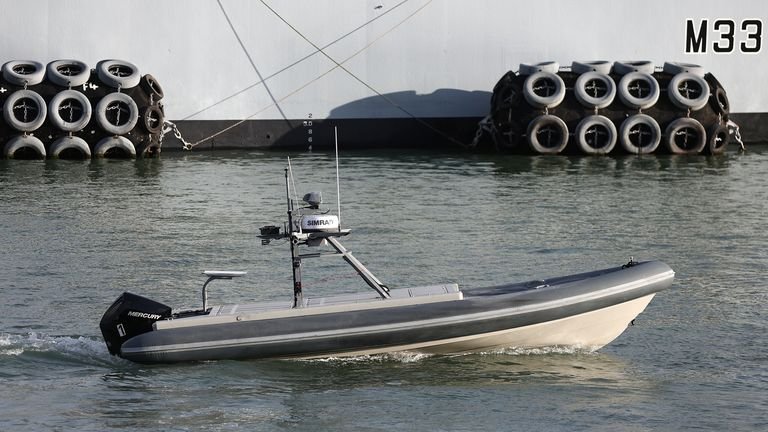
An unmanned surface vehicle called Rattler is demonstrated. Pic: PA
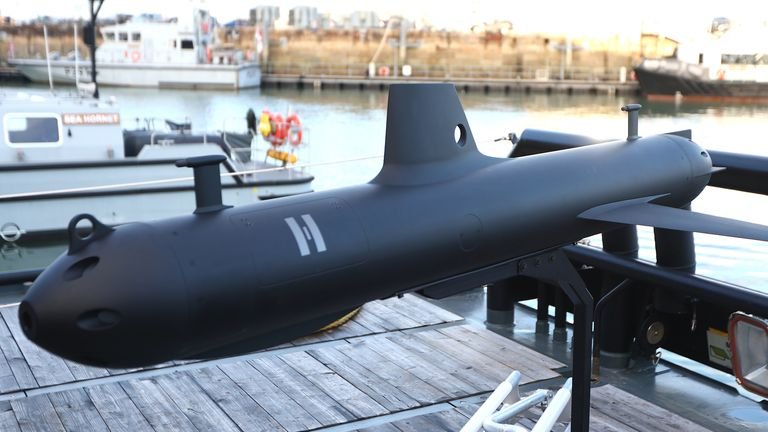
SG-1 Fathom is an autonomous underwater glider. Pic: PA
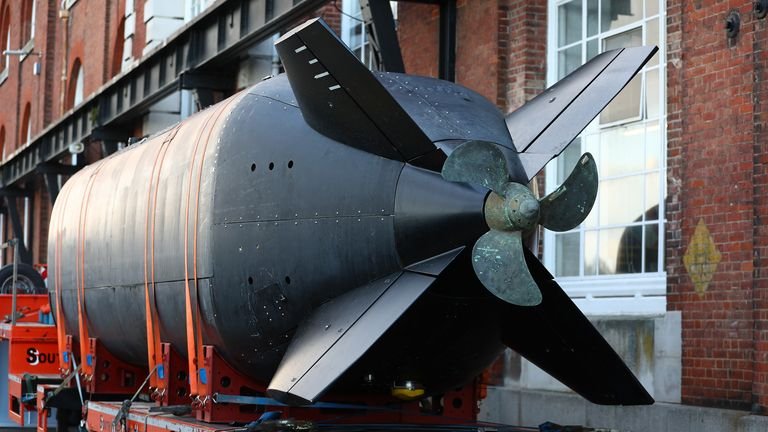
An experimental uncrewed sub called Excalibur is on view at Portsmouth Naval Base. The new threats facing the UK and its allies under the sea are highlighted by Mr Healey, who emphasizes the critical importance of defending infrastructure. He calls for rapid innovation in defense to maintain an edge on the battlefield. Atlantic Bastion, a new approach to secure the underwater battlespace against Russia, is launched alongside a speech from First Sea Lord General Sir Gwyn Jenkins. The initiative will utilize AI-powered technology to connect ships, submarines, aircraft, and unmanned vessels for faster decision-making in targeting enemy threats. The UK’s subsea infrastructure, essential for connectivity and energy supplies, is at the heart of this defense strategy. The Royal Navy is depicted monitoring the high-tech military hardware in the accompanying image.
On Thursday, the UK and Norway signed a defence agreement allowing their navies to operate a combined fleet of warships.
The pact is aimed at protecting critical undersea cables.
Multimillion-pound plans for technology needed to defend the UK’s undersea cables and pipelines have been set out by defence chiefs.
The Atlantic Bastion programme, announced as part of the Strategic Defence Review, will combine autonomous vehicles and AI with warships and aircraft to identify threats to underwater structure and to defend them.
The Ministry of Defence (MoD) said it was «in direct response to a resurgence in Russian submarine and underwater activity», including the spy ship Yantar, which was tracked around UK waters last month.
The project has attracted a combined investment of £14m from the MoD and industry this year, with hopes the technology can be deployed next year.
A total of 26 firms from the UK and Europe have submitted proposals for the project.
Last week Defence Secretary John Healey visited Portsmouth Naval Base to examine some of the early technology which could be used as part of Atlantic Bastion.
It included the SG-1 Fathom, an underwater glider; Rattler, an unmanned remote-controlled boat; a model of an autonomous anti-submarine helicopter called Proteus; and an uncrewed experimental submarine called Excalibur.
An unmanned surface vehicle called Rattler is demonstrated. Pic: PA
SG-1 Fathom is an autonomous underwater glider. Pic: PA
An experimental uncrewed sub called Excalibur is on view at Portsmouth Naval Base. The UK and its allies are facing new threats under the sea, where adversaries are targeting critical infrastructure essential to our way of life, according to Mr. Healey. He emphasized the need for rapid innovation in defense to stay ahead in this new era of threats.
The launch of Atlantic Bastion coincides with a speech from First Sea Lord General Sir Gwyn Jenkins at the International Sea Power Conference in London. Sir Gwyn highlighted the vulnerability of the maritime domain and the strategic importance of maritime security for the UK. He introduced Atlantic Bastion as a bold new approach to securing the underwater battlespace against a modernizing Russia.
The Ministry of Defense (MoD) spokesperson explained that Atlantic Bastion will integrate ships, submarines, aircraft, and unmanned vessels through AI-powered acoustic detection technology. This will create a digital targeting web, enabling faster decisions in targeting enemy threats. Subsea infrastructure, crucial for the UK’s connectivity, carries 99% of international telecommunications data and vital energy supplies like electricity, oil, and gas.
The signing of a defense agreement between the UK and Norway allows their navies to operate a combined fleet of warships to protect critical undersea cables. This pact emphasizes the importance of safeguarding key infrastructure from potential threats.
Overall, the focus is on enhancing defense capabilities to address evolving threats in the maritime domain. By leveraging advanced technologies and strategic partnerships, the UK aims to maintain a competitive edge in safeguarding its interests and ensuring national security. Multimillion-pound plans for technology needed to defend the UK’s undersea cables and pipelines have been set out by defence chiefs. The Atlantic Bastion programme, announced as part of the Strategic Defence Review, will combine autonomous vehicles and AI with warships and aircraft to identify threats to underwater structure and to defend them. The Ministry of Defence (MoD) said it was «in direct response to a resurgence in Russian submarine and underwater activity», including the spy ship Yantar, which was tracked around UK waters last month. The project has attracted a combined investment of £14m from the MoD and industry this year, with hopes the technology can be deployed next year. A total of 26 firms from the UK and Europe have submitted proposals for the project. Last week Defence Secretary John Healey visited Portsmouth Naval Base to examine some of the early technology which could be used as part of Atlantic Bastion. It included the SG-1 Fathom, an underwater glider; Rattler, an unmanned remote-controlled boat; a model of an autonomous anti-submarine helicopter called Proteus; and an uncrewed experimental submarine called Excalibur.
[Image: An unmanned surface vehicle called Rattler is demonstrated. Pic: PA]
[Image: SG-1 Fathom is an autonomous underwater glider. Pic: PA]
[Image: An experimental uncrewed sub called Excalibur is on view at Portsmouth Naval Base.]
SOURCE

Por Ismael Buendía
Soy Ismael Buendía, director de Comunicación con más de 20 años de experiencia en reputación corporativa, gestión de crisis y estrategia digital. He liderado equipos en multinacionales y agencias, asesorado a directivos y diseñado estrategias de alto impacto. Me motiva la transparencia, la innovación y la comunicación como ventaja competitiva.