


You may remember the stories about the troubled clothing industry in Leicester in recent years: poor working conditions, below minimum wage pay, «dark factories» catering to the fast fashion industry. What is less known is the aftermath. Simply put, the industry has collapsed.
In light of the ongoing scandals surrounding «sweatshop» conditions in Leicester, most major brands have now deserted the city, leading to a decline in production in the once-thriving hub that prided itself on «clothing the world».
With the rise of competition from Chinese companies like Shein and Temu, and the imminent influx of low-cost imports from India following the recent trade agreement with the UK, Leicester now faces a dual existential threat that could potentially spell the end of its fashion industry.
Assessing the extent of the recent collapse is difficult due to the small-scale nature of many textile and apparel factories in Leicester, which can open and close rapidly. However, data from SP&KO, a consultancy founded by fashion industry veterans Kathy O’Driscoll and Simon Platts, shows that the number of factories has plummeted from 1,500 in 2017 to just 96 this year, marking a 94% decline amidst concerns of a broader crisis in British clothing manufacturing.
More on this story:
The modern slaves making our clothes in Leicester
How Leicester’s textile workers are being exploited
Boohoo failed in Leicester supply chain malpractice
In an extensive investigation conducted over recent months, Sky News has visited shuttered sites in the city due to a collapse in demand. Thousands of fashion industry workers are believed to have lost their jobs, as many factories now sit idle with unused machinery.
The majority of high street and fast fashion brands that previously manufactured their clothes in Leicester have now shifted their production to North Africa and South Asia.
Furthermore, a recent report from UKFT – Britain’s fashion and textiles industry lobby group – reveals that a staggering 95% of clothing companies have either reduced or completely ceased manufacturing in the UK. About 58% of brands, based on turnover, now have a clear policy against sourcing clothes from the UK.

Seamstresses in one of the city’s former factories

Clothing industry workers in Leicester
Jenny Holloway, chair of the Apparel & Textile Manufacturers Association, stated: «We are aware of factories that were approached to potentially become suppliers [to high street brands], progressed through the process, invested in samples, time, money, policies, only to be told: ‘sorry, we can’t work with you because Leicester is off-limits.'»
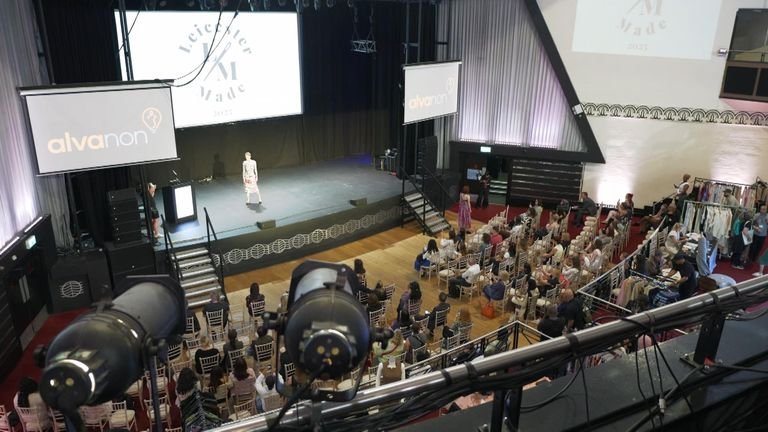
A trade fair tries to reignite enthusiasm for the local clothing industry
Tejas Shah, a third-generation manufacturer from Shahtex, a family company that used to supply materials to Marks & Spencer, shared: «I’ve had conversations with brands in the past who indicated they would be interested in working with me if my factory was located 15 miles north in Loughborough. «I am unable to find service providers who are willing to work with me due to my LE1, LE4 postcode.»

Shahtex in Leicester used to make materials for Marks & Spencer
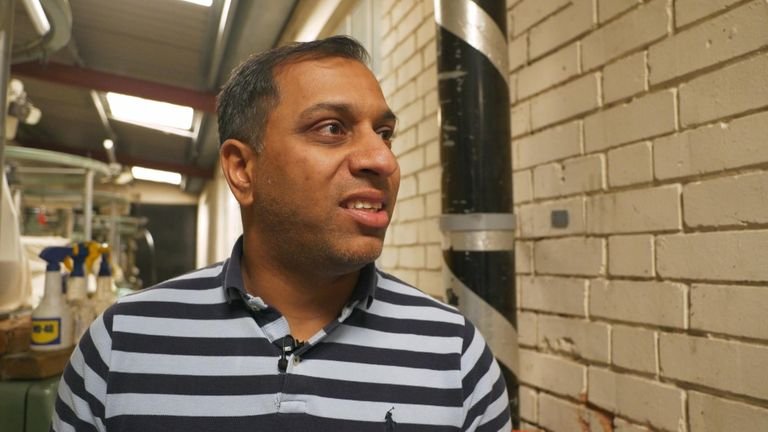
Tejas Shah, of Leicester-based firm Shahtex
Threat of Chinese brands Shein and Temu
That pain has been exacerbated by a new phenomenon: the rise of Chinese fast fashion brands Shein and Temu.
They offer consumers ultra-cheap clothes and goods, made in Chinese factories and flown direct to UK households. And, thanks to a customs loophole known as «de minimis», those goods don’t even incur tariffs when they arrive in the country.

An online advert for Chinese fast fashion company Shein
According to Satvir Singh, who runs Our Fashion, one of the last remaining knitwear producers in the city, this threat could prove the final straw for Leicester’s garments sector.
«It is having an impact on our production – and I think the whole retail sector, at least for clothing, are feeling that pinch.»

Inside one of the city’s remaining clothesmakers
While Donald Trump has threatened to abolish the loophole in the US, the UK has only announced a review with no timeline.
«If we look at what Trump’s done, he’s just thinking more about his local economy because he can see the long-term effects,» said Mr Singh. «I think [abolishing de minimis exceptions] will make a huge difference. I think ultimately it’s about a level playing field.»
58% of brands, by turnover, now have a specific policy to not source clothing from the UK. Jenny Holloway, chair of the Apparel & Textile Manufacturers Association, mentioned how factories in Leicester were left out of potential supplier agreements due to the city being embargoed. Tejas Shah, a manufacturer, shared how his LE1, LE4 postcode hindered his ability to work with certain brands. The emergence of Chinese fast fashion brands Shein and Temu, offering cheap goods made in China with no tariffs, poses a threat to Leicester’s garment sector. Satvir Singh of Our Fashion expressed concerns about the impact on production and the retail sector. While the US is considering abolishing the «de minimis» loophole, the UK has only announced a review with no set timeline. Mr. Singh emphasized the need for a level playing field in the industry. Leicester’s Clothing Industry Faces Collapse Amidst Global Competition
The Leicester clothing industry has been at the center of controversy in recent years due to reports of grim labor conditions, pay below minimum wage, and «dark factories» catering to the fast fashion sector. However, what is less known is the aftermath of these scandals – the industry has experienced a significant decline.
Major brands that once relied on Leicester for their clothing production have now abandoned the city, leading to a sharp decrease in manufacturing in a city that was once known for «clothing the world.» This shift has been exacerbated by two significant threats – competition from Chinese companies like Shein and Temu and the anticipated influx of cheap imports from India following a recent trade deal with the UK. Many fear that this combination of factors could spell the end for Leicester’s fashion business.
The extent of the industry’s collapse is challenging to gauge accurately due to the presence of numerous small-scale textile and apparel factories in Leicester that can start up and shut down quickly. However, data from SP&KO, a consultancy established by fashion industry veterans Kathy O’Driscoll and Simon Platts, reveals a staggering decline from 1,500 factories in 2017 to just 96 this year – a 94% decrease. This decline has raised concerns about the broader crisis facing British clothes-making.
Sky News conducted an in-depth investigation that uncovered abandoned sites and factories in Leicester where demand has plummeted, resulting in the loss of thousands of jobs for fashion workers. Many factories now sit empty, with machines idle and covered in dust.
The majority of high street and fast fashion brands that previously sourced their clothing from Leicester have shifted their supply chains to North Africa and South Asia. A recent report from UKFT, Britain’s fashion and textiles lobby group, revealed that 95% of clothing companies have either reduced or completely eliminated manufacturing in the UK. Additionally, 58% of brands have explicit policies against sourcing clothes from the UK.
Jenny Holloway, chair of the Apparel & Textile Manufacturers Association, highlighted the challenges faced by Leicester factories that were poised to become suppliers for high street brands but were ultimately unable to do so due to an embargo on Leicester-produced goods.
Tejas Shah, a third-generation manufacturer from Shahtex, a family company that previously supplied materials to Marks & Spencer, shared his experience of brands expressing willingness to work with him if he relocated his factory to Loughborough, just 15 miles north of Leicester.
In conclusion, the Leicester clothing industry is grappling with a severe decline following a series of scandals and increased competition from global players. The city’s once-thriving fashion business is at risk of extinction as brands shift their production elsewhere, leaving behind empty factories and unemployed workers. The future of Leicester’s clothing industry remains uncertain, with efforts to reignite enthusiasm through trade fairs and local initiatives facing an uphill battle against these formidable challenges. Because of my LE1, LE4 postcode, they are reluctant to work for me.»
SOURCE