

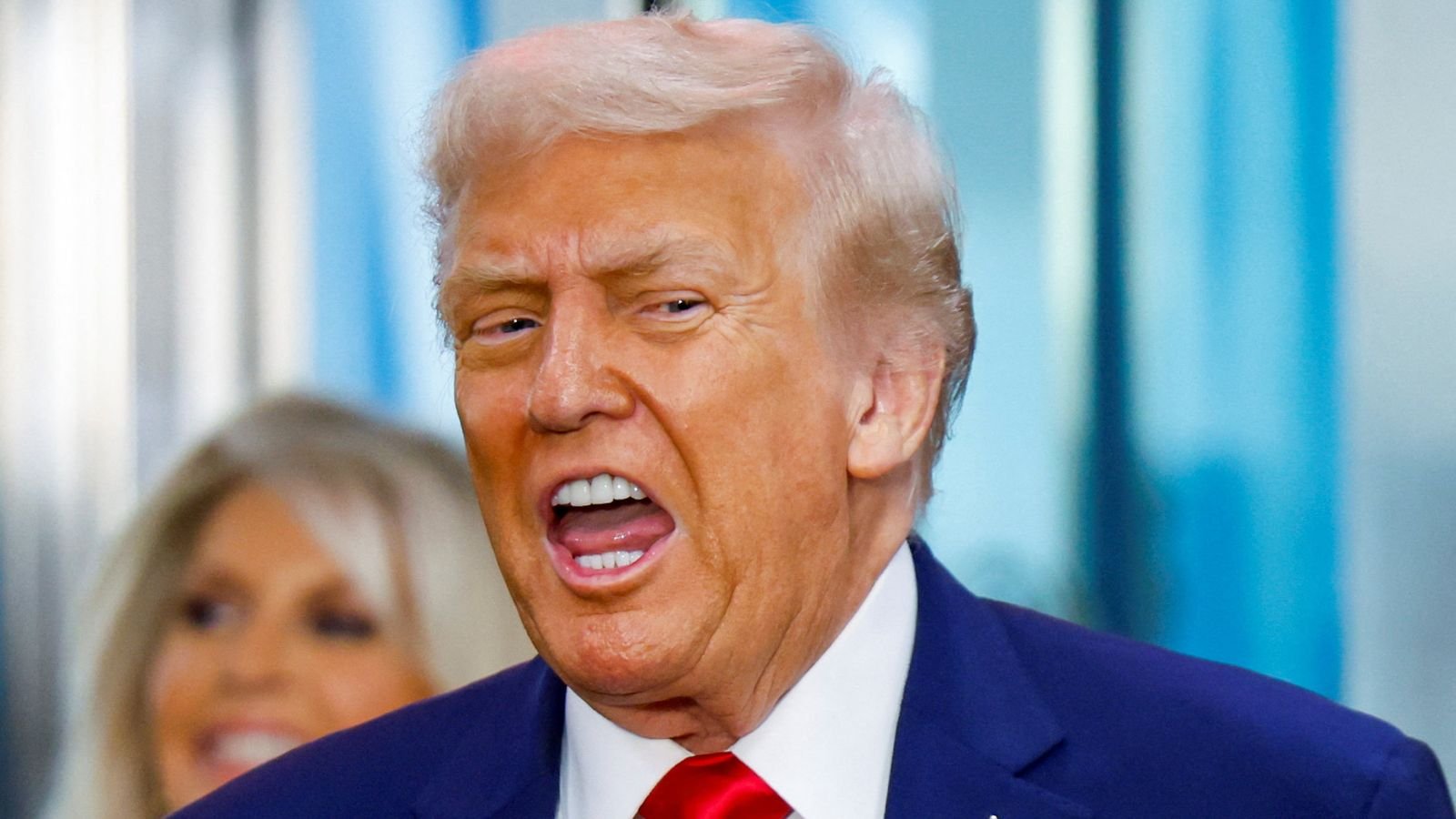
Donald Trump has announced a new round of trade tariffs affecting various sectors, with the UK government actively engaging with the US on the proposed punitive rates. The US president revealed on his Truth Social account that a 100% tariff would be imposed on branded or patented pharmaceutical products starting from October 1st. Companies can avoid this duty by already having initiated the construction of a new factory in the US.
The UK government has acknowledged the plans and is in discussions with the Trump administration. Additionally, a 50% tariff will be imposed on imported kitchen and bathroom cabinets, a 30% rate on upholstered furniture, and a 25% tariff on heavy truck shipments starting from the same date. It remains unclear whether nations with existing trade deals with the US, such as the UK and the European Union, will face lower duties. Currently, both the UK and EU face 10% and 15% tariffs on their exports, respectively.
The UK’s trade deal aims to negotiate preferential treatment for pharmaceuticals and ingredients. However, no specific agreement has been reached yet. There is a possibility that the new tariffs will align with higher sectoral tariffs, such as those for steel, that are currently in effect above the base rate.
A UK government spokesperson emphasized the importance of the pharmaceutical sector to the economy and stated ongoing engagement with the US to achieve favorable outcomes. Ireland’s foreign minister anticipated facing a 15% baseline rate under the US-EU trade arrangement due to the influx of pharmaceutical products into the US from other countries.
Asian pharmaceutical firms experienced a decline in stock prices as they sought clarity on the new rules.
Will trade deal with Trump cost UK green jobs?
Shares of AstraZeneca (AZ) dropped 1.4% in Europe, with GSK and Hikma Pharmaceuticals also experiencing declines initially but recovering later. AstraZeneca, the UK’s most valuable listed company, believes it may be exempt from the tariffs due to its significant US operations and investments. The company had announced plans for additional US investment and canceled a project in the UK in response to the tariff threats.
US data shows a substantial import of drugs and medicines from abroad, with the UK accounting for a portion of these imports. Critics of the president’s approach warn that a 100% tariff could increase healthcare costs in the US.
President Trump aims to lower prices by encouraging domestic production while generating revenue through tariffs. However, US industry groups are opposed to these measures, fearing the impact on investment plans. The US Chamber of Commerce called for a reconsideration of truck tariffs, highlighting that affected nations like Mexico, Canada, Japan, Germany, and Finland are allies of the US with no national security threat.
Nigel Green, CEO of deVere Group, criticized the 100% pharmaceutical tariff, stating it would have far-reaching effects on the global health economy. He predicted that instead of boosting manufacturing, the tariff would deter investment and drive capital to more stable markets.