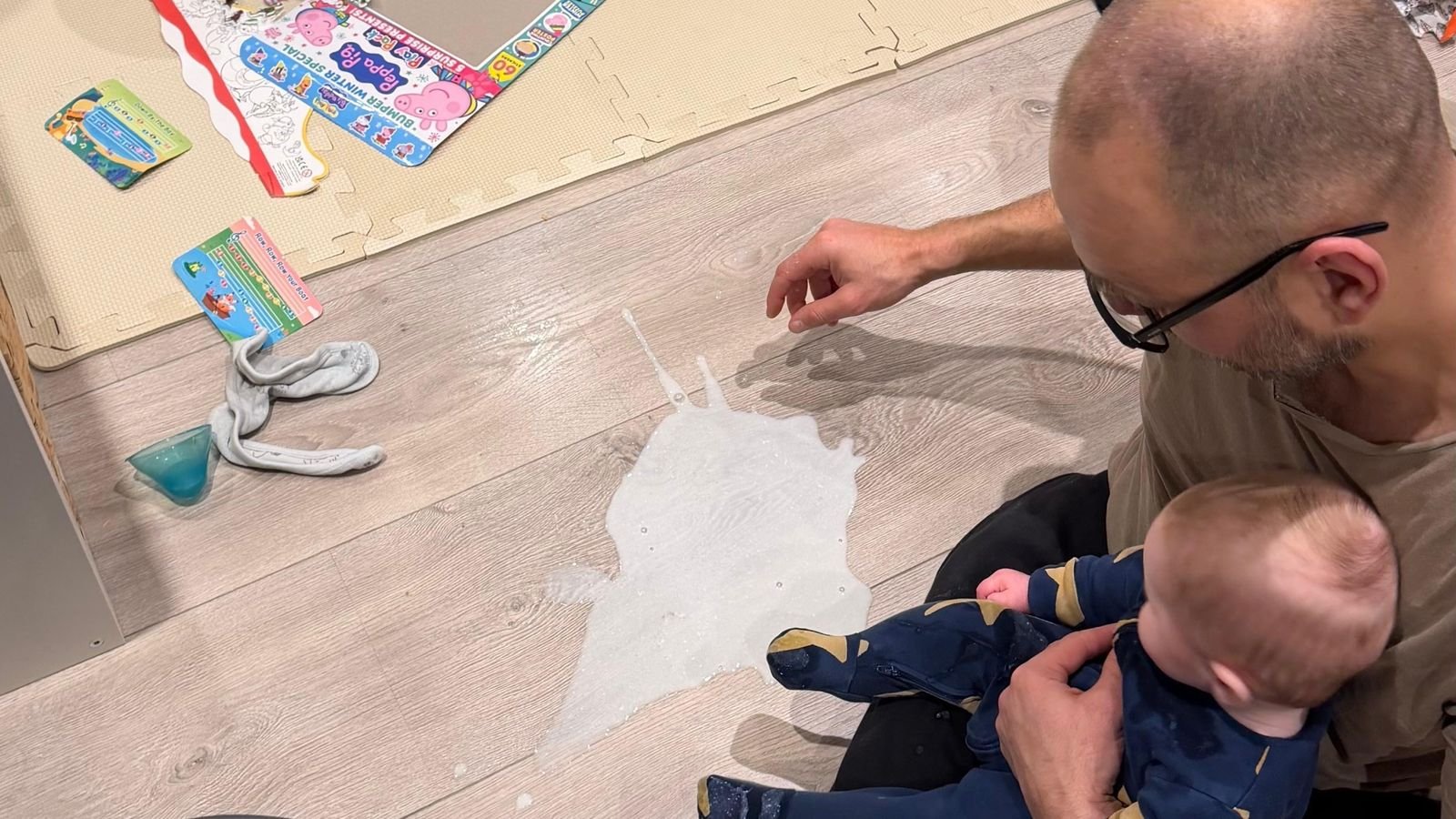
A father whose son needed hospital treatment after being fed a now-recalled batch of Nestle baby formula has told Sky News he wants «answers» after putting his «faith and trust» in the brand.
The UK Food Standards Agency (FSA) has said it found cereulide, a toxin that can cause vomiting and diarrhoea, in batches of formula produced by food and drink giant Nestle.
FSA investigators, along with the UK Health Security Agency (HSA), have been looking into more than 60 batches of Nestle SMA formula since they were recalled earlier this month.
At the time of recall, Nestle said it was due to the «potential presence» of the heat-resistant toxin and that the move was out of an «abundance of caution».
The FSA, when asked by Sky News, did not confirm how many batches their tests had revealed to be affected.
To date, there have been no confirmed links of illness to the recalled batches.
Rhys Edwards’ five-month-old son fell ill soon after the New Year.
Mr Edwards, who works in construction, said the boy «started vomiting and we were obviously a little bit concerned, but we didn’t think it was anything, just general kids’ stuff.
«And then the next day he started vomiting, full on, all day.»
Mr Edwards took his son to the GP, who sent them to hospital because of concerns about the baby’s blood glucose levels and dehydration.
While at hospital, a relative sent Mr Edwards information about the Nestle recall.
After checking their tins of SMA formula, the family discovered they’d been giving their son one of the affected batches.
Mr Edwards said: «You feel guilty in a way that you’ve given them this stuff that’s potentially got [the toxin] in. It’s horrible.
«As parents, it is bewildering, the massive range of formulas on the shelves. So you pick a brand, and you think, ‘Okay, this brand is going to be great. ‘ «
He expressed his frustration by stating, «So, you kind of place your faith and your trust in them that all these checks are carried out and that they’ve got quality control procedures in place to prevent things like this from happening.»
Living in Jersey, the family immediately switched formula, but Mr. Edwards noted that his son’s symptoms persisted for several days, leading to further hospital treatment due to difficulties in feeding.
Having reported his case to Nestle, Mr. Edwards emphasized that his child had «actually slipped a weight percentile» and demanded «answers» and «lessons learnt.»
The issue was identified by the FSA as stemming from an oil ingredient in the formula supplied by a third-party supplier shared by Nestle and Danone, which also recalled a batch of its Aptamil baby formula.
Following FSA testing, a Nestle spokesperson confirmed the voluntary recall on January 5, 2026, due to the potential presence of cereulide in specific batches caused by an ingredient used.
Danone affirmed its commitment to ensuring the safety and quality of its infant formula products and urged parents and healthcare professionals to reach out with any questions or concerns.
The father of a child who required hospital treatment after consuming a recalled batch of Nestle baby formula expressed his desire for answers and accountability from the company. The UK Food Standards Agency (FSA) discovered cereulide, a toxin that can lead to symptoms like vomiting and diarrhea, in several batches of Nestle SMA formula.
Investigations by the FSA and the UK Health Security Agency (HSA) focused on over 60 batches of Nestle formula that were recalled in response to the findings. The recall was prompted by the potential presence of the heat-resistant toxin, although the exact number of affected batches was not confirmed by the FSA when approached by Sky News. Despite the recalls, there have been no reported cases of illness linked directly to the affected products.
The child of Rhys Edwards, a resident of Jersey, experienced illness shortly after the start of the new year. Despite switching formulas immediately, the child continued to exhibit symptoms for several days, requiring further hospital treatment due to feeding difficulties. Mr. Edwards reported the incident to Nestle, expressing concerns about his child’s health and seeking clarity on the situation.
In a statement, Nestle acknowledged that the issue stemmed from an ingredient provided by a third-party supplier, shared with Danone, which also recalled a batch of its Aptamil baby formula. The company took swift action to issue a voluntary recall on January 5, 2026, due to the possible presence of cereulide in specific batches of their products. Nestle assured consumers that the scope and nature of the recall remained unchanged and thanked individuals for their patience and understanding during the process.
Danone, in a separate statement, emphasized its commitment to maintaining the safety and quality of its infant formula products, urging parents and healthcare professionals to reach out with any questions or concerns. Both Nestle and Danone prioritized transparency and consumer welfare in their responses to the recalls, emphasizing the importance of trust and accountability in the industry.
As parents navigate the overwhelming array of formula options available, incidents like these serve as a reminder of the importance of thorough quality control measures and vigilant oversight in the production and distribution of infant nutrition products. The Edwards family’s experience highlights the impact of such incidents on individual families and underscores the need for companies to prioritize consumer safety above all else.
SOURCE

Por Michael Bunting
“I’m Michael Bunting, Communications Director with over 20 years of experience in corporate reputation, crisis management, and digital strategy. I have led teams in multinational companies and agencies, advised executives, and designed high-impact strategies. I am driven by transparency, innovation, and leveraging communication as a competitive advantage.”