
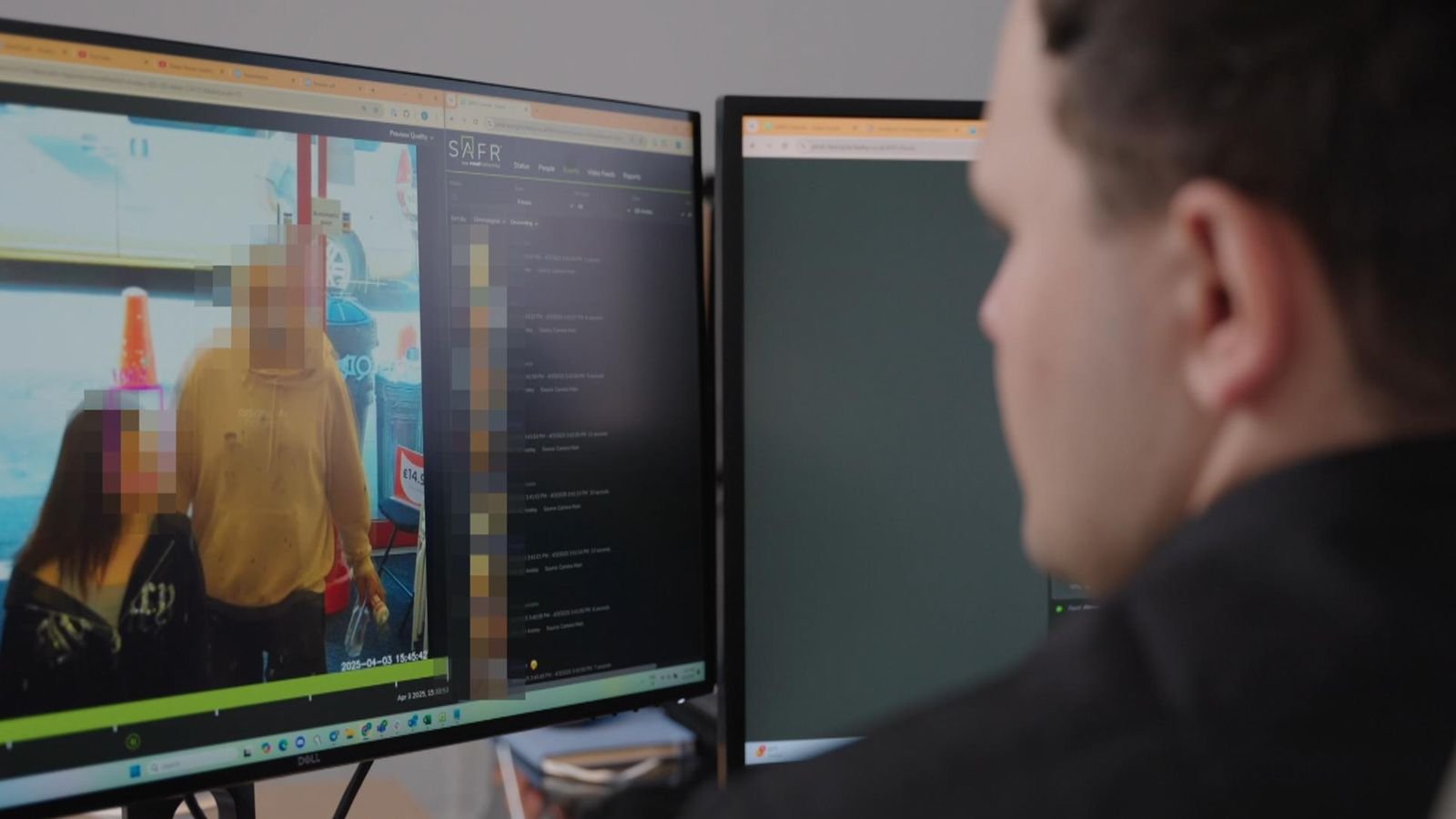
The holiday season is here, and products are flying off the shelves, but the cash registers aren’t ringing as much as expected.
Shoplifting is on the rise across the country, prompting retailers to take matters into their own hands.
Concerned about the police response to theft, many businesses are turning to controversial facial recognition technology to catch culprits before they strike.
Names like Sainsbury’s, Asda, Budgens, and Sports Direct have adopted Facewatch, a cloud-based facial recognition security system that scans faces upon entry. These images are then compared to a database of known offenders, triggering an alert if a match is found, notifying the business of a potential shoplifter on the premises.
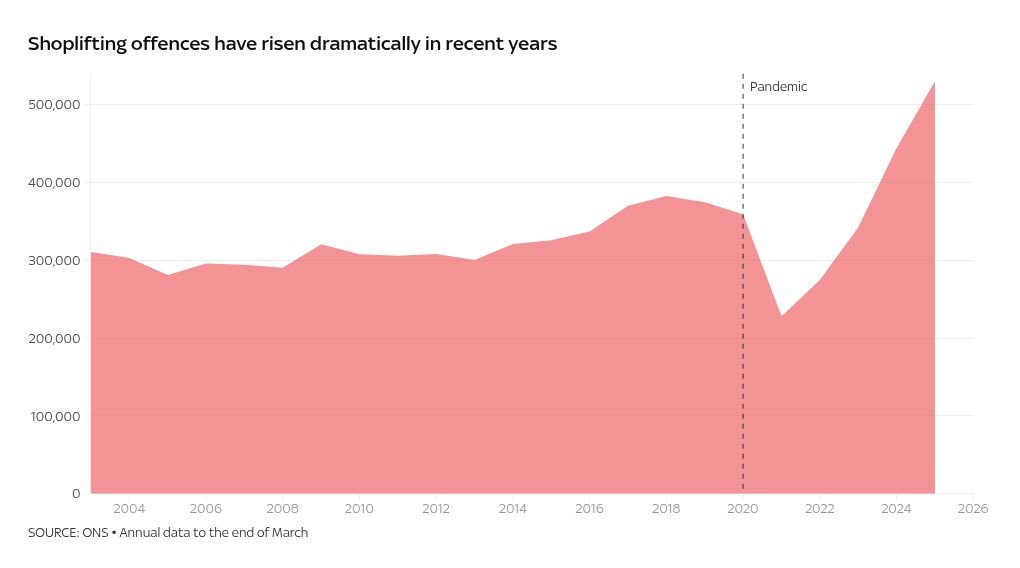
This move comes as official data shows a 13% increase in shoplifting offenses in the year leading up to June, totaling almost 530,000 incidents. Notably, over 80% of these cases result in no charges.
Simultaneously, retailers are reporting more than 2,000 incidents of violence or abuse towards their staff daily. Faced with increasing losses and safety concerns, businesses feel compelled to enhance their security measures due to limited police resources only being able to respond to a fraction of incidents.
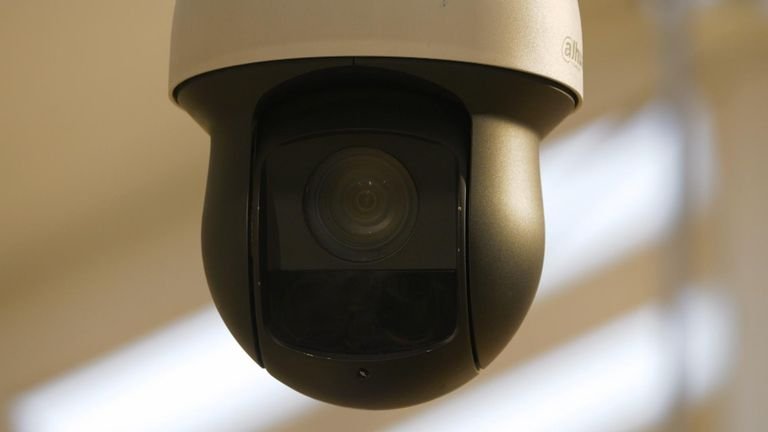
A Facewatch camera
At Ruxley Manor Garden Centre in south London, managing director James Evans highlighted the increasing boldness and organization of theft, with losses from shoplifting accounting for approximately 1.5% of turnover. «While that may sound small, it significantly impacts our bottom line,» he stated, noting that substantial amounts of merchandise can be stolen in a single visit.
«We’ve had instances where children are sent in to carry out the theft. They know their parents will be waiting in the car park, and they are confident that we can’t stop them.»

Gurpreet Narwan is seen at the garden centre while being shown how Facewatch works
Additionally, staff members have encountered their share of confrontations with shoplifters. In one incident, employees trying to stop a suspected thief were almost hit by an accomplice in a vehicle. James emphasized, «This is no longer just about merchandise loss; it’s about the safety of our staff.»
Despite its benefits, the technology faces criticism. Civil liberties groups caution that the widespread use of such technology is infringing on privacy rights.
Silkie Carlo, director of Big Brother Watch, labeled it «a very dangerous form of privatized policing.»
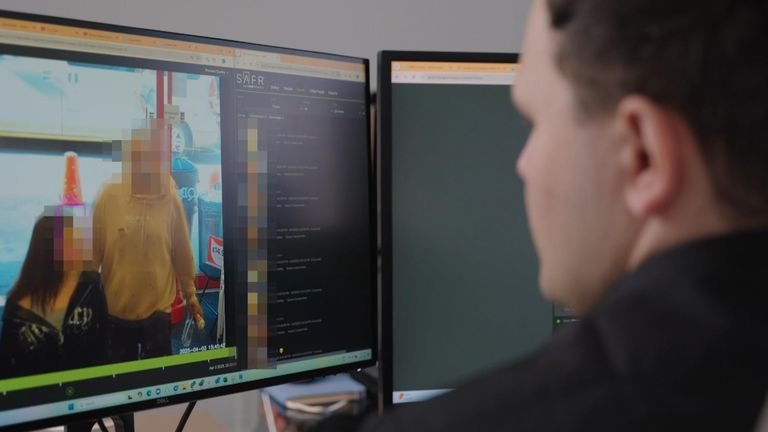
Facewatch is seen in operation as retailers look to crack down on crime.
She expressed, «[It] poses a threat to fairness and justice for everyone, as now simply doing your grocery shopping entails a company quietly collecting your highly sensitive biometric data. This data is as sensitive as your passport, and it’s determining whether you’re a criminal or not.»
Silkie shared that they regularly receive reports from individuals wrongly targeted, including Rennea Nelson, who was mistakenly identified as a shoplifter at a B&M store due to an error in the facial recognition database. Nelson recounted being threatened with police action and warned about potential immigration status repercussions.
Gurpreet’s profile can be seen on the Facewatch database
«He said to me, if you don’t get out, I’m going to call the police. During that moment, I turned around and asked, «Are you speaking to me?» He replied affirmatively, saying, «Yes, your face triggered the alarm because you’re a thief.» At that time, I was six to seven months pregnant, experiencing a high-risk pregnancy, and dealing with a lot of anxiety. His confrontation triggered me even more.»
Later, the retailer admitted the mistake and apologized, attributing it to a rare human error.
Read more:
Elon Musk closer to becoming first-ever trillionaire
William and George help prepare Christmas lunch for the homeless
A spokesperson for B&M stated, ‘This was a simple case of human error, and we sincerely apologize to Ms. Nelson for any distress caused. Incidents like this are uncommon. Facewatch services operate in strict accordance with UK GDPR to safeguard store employees from aggressive shoplifting incidents.»
Nick Fisher, CEO of Facewatch, defended the technology against exaggerated criticism, stating, «The language used to describe it as ‘dystopian’, ‘Orwellian’, ‘turning people into barcodes’ is alarmist and misleading. We only retain data of known repeat offenders in a responsible and proportionate manner… When used responsibly and proportionately, this technology can be a force for good in today’s world.»
Despite the controversy, businesses are increasingly adopting this technology to combat rising shoplifting incidents, which have increased by 13% in the past year.
In August, data revealed that over 80% of cases resulted in no charges being filed.
The Christmas period is upon us, and goods are flying off the shelves, but for some reason, the tills are not ringing as loudly as they should be. Across the country, the five-finger discount is being used with such frequency that retailers are taking action into their own hands.
With concerns about the police response to shoplifting, many are now resorting to controversial facial recognition technology to catch culprits before they strike. Sainsbury’s, Asda, Budgens, and Sports Direct are among the high-street businesses that have signed up to Facewatch, a cloud-based facial recognition security system that scans faces as they enter a store. Those images are then compared to a database of known offenders and, if a match is found, an alert is set off to warn the business that a shoplifter has entered the premises.
It comes as official figures show shoplifting offenses rose by 13% in the year to June, reaching almost 530,000 incidents. Figures reported in August showed more than 80% result in no charge.
At the same time, retailers are reporting more than 2,000 cases of violence or abuse against their staff every day.
Facewatch services are designed to operate strictly in compliance with UK GDPR and to help protect store colleagues from incidents of aggressive shoplifting.
Nick Fisher, chief executive of Facewatch, said the backlash was disproportionate.
«Well, I think it’s designed to be quite alarmist, using language like ‘dystopian’, ‘orwellian’, ‘turning people into barcodes’,» he said.
«The inference of that is that we will identify people using biometric technology, hold and store their own, store their data. And that’s just, quite frankly, misleading. We only store and retain data of known repeat offenders, of which it’s been deemed to be proportionate and responsible to do so… I think in the world that we are currently operating in, as long as the technology is used and managed in a responsible, proportionate way, I can only see it being a force for good.»
Businesses are increasingly taking security measures into their own hands due to rising losses and safety concerns, as police forces are unable to respond to most incidents. At Ruxley Manor Garden Centre in south London, shoplifting now accounts for 1.5% of turnover, leading to significant financial losses. Instances of theft have become more brazen and organised, with children even being sent in to steal while parents wait in the car park. The safety of staff members is also at risk, as employees have had dangerous encounters with shoplifters.
While technology like Facewatch is being used to combat crime, critics warn that it poses a threat to privacy and civil liberties. Silkie Carlo from Big Brother Watch raised concerns about the use of biometric data for surveillance, highlighting cases of mistaken identity that have led to innocent individuals being wrongly targeted. One such case involved Rennea Nelson, who was falsely accused of shoplifting due to being added to a facial recognition database by mistake.
Despite some errors in the system, retailers like B&M have acknowledged these mistakes and apologized for the distress caused. It is important for businesses to balance security measures with respect for individual privacy and rights to ensure fair treatment for all. Facewatch services are designed to strictly adhere to UK GDPR regulations and to assist in safeguarding store employees from instances of aggressive shoplifting. Nick Fisher, the CEO of Facewatch, defended the technology against criticisms of being dystopian or Orwellian, emphasizing that only data of known repeat offenders is stored in a proportionate and responsible manner. Despite some concerns, businesses are recognizing the importance of implementing such technology.
SOURCE

Por Michael Bunting
“I’m Michael Bunting, Communications Director with over 20 years of experience in corporate reputation, crisis management, and digital strategy. I have led teams in multinational companies and agencies, advised executives, and designed high-impact strategies. I am driven by transparency, innovation, and leveraging communication as a competitive advantage.”