

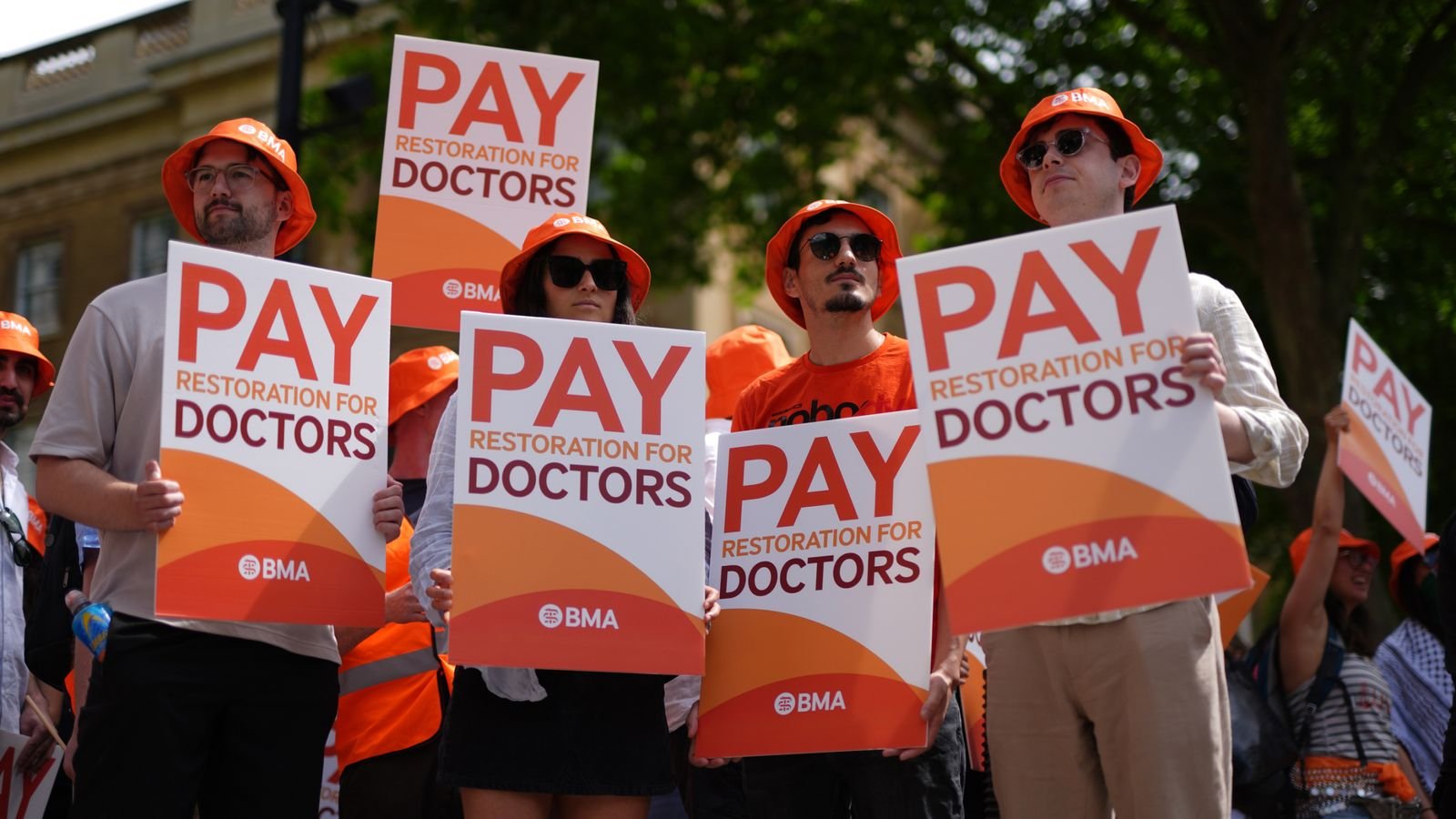
Resident doctors in England are set to go on strike next month, as announced by the British Medical Association (BMA). The planned five-day strike, scheduled for 14 to 19 November, is a response to the ongoing issues surrounding jobs and pay within the healthcare sector.
These resident doctors, formerly known as junior doctors, represent approximately half of the total number of doctors working in the National Health Service (NHS). Dr. Jack Fletcher, chair of the BMA’s resident doctors committee, has emphasized the urgent need for Health Secretary Wes Streeting to present a substantial offer addressing the concerns related to employment and compensation.
Dr. Fletcher expressed disappointment in the current situation, stating, «We have been engaged in discussions with the government, urging the health secretary to address the troubling trend of doctors facing unemployment. It is disheartening to see the skills of second-year doctors in England being underutilized while numerous patients await treatment and hospital shifts remain unfilled.»
While the BMA is eager to reach an agreement, Dr. Fletcher highlighted the lack of cooperation from the government, compelling doctors to consider strike action as a last resort. He emphasized the importance of addressing pay discrepancies and creating more job opportunities and training positions to enhance the healthcare system.
Response from Wes Streeting
In response to the planned strike, Health Secretary Wes Streeting criticized the BMA’s decision, labeling it as a «damaging» move. He urged the BMA to reconsider the strike action and return to negotiations, emphasizing the government’s willingness to collaborate in improving the working conditions of resident doctors and ensuring a sustainable future for the NHS.
Addressing the potential consequences of the strike, Daniel Elkeles, chief executive of NHS Providers, expressed concerns about the impact on patient care, particularly as the health service braces for another challenging winter.
It is worth noting that resident doctors previously engaged in a five-day walkout in July. The BMA has been advocating for a substantial pay increase of 29.2% to counteract the decline in pay rates since 2008.
As the situation unfolds, the healthcare sector faces uncertainty and challenges, with both parties striving to find a resolution that benefits all stakeholders involved.
For more information on related developments: