
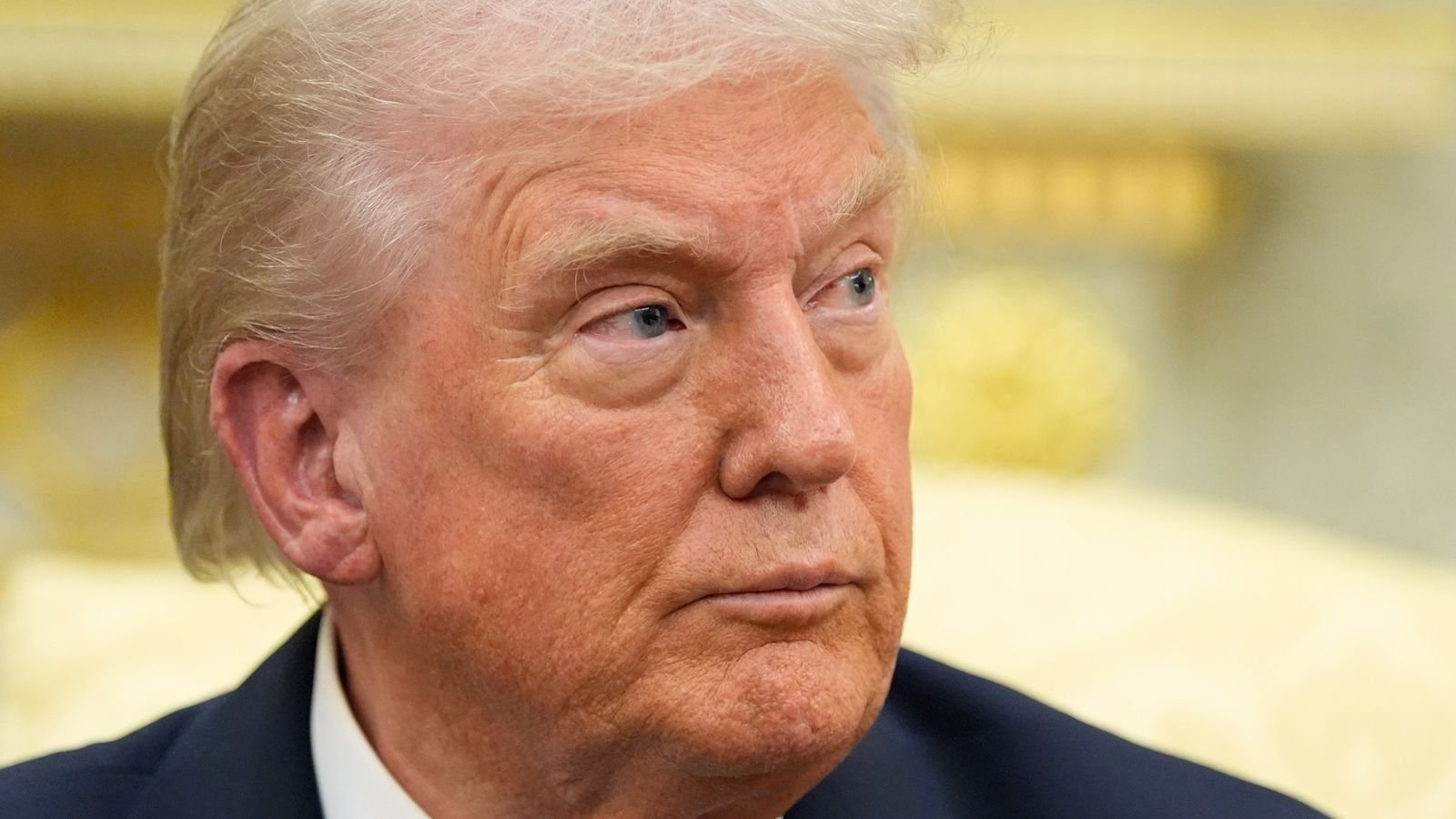
Donald Trump has imposed sanctions on Russia’s two largest oil companies – and expressed his frustration with Vladimir Putin.
In a significant policy shift, new restrictions have been announced against Rosneft and Lukoil – along with numerous subsidiaries – due to «Russia’s lack of serious commitment to a peace process to end the war in Ukraine».
Ukraine war latest: US hits Russia’s biggest oil firms with sanctions
This has led to a rise in the oil price as the market anticipates reduced flows.
Following a five-month low on Monday, the benchmark oil price increased by 3.4%.
A barrel of Brent crude is now priced at $64.73, a level last seen nearly two weeks ago.
«Now is the time to stop the killing and for an immediate ceasefire,» US Treasury Secretary Scott Bessent stated.
«Given President Putin’s refusal to end this senseless war, Treasury is sanctioning Russia’s two largest oil companies that fund the Kremlin’s war machine. We encourage our allies to join us in, and adhere to, these sanctions.»
This move signifies a significant change for the Trump administration, which has oscillated between pressuring Moscow and adopting a more conciliatory approach to achieve peace in Ukraine.
Trump frustrated with Putin
The US president has resisted pressure to impose energy sanctions on Russia, hoping Mr Putin would agree to end the conflict. But with no resolution in sight, he stated it was time.
Mr Trump mentioned he maintains a «very good relationship» with his Russian counterpart, but felt compelled to cancel their planned meeting as «it didn’t feel right to me».
Reflecting growing frustration, he informed reporters: «It didn’t feel like we were going to get to the place we have to get. So I cancelled it. But we’ll do it in the future.
«I have good conversations. And then, they don’t go anywhere. They just don’t go anywhere.»
He also hinted that the sanctions could be lifted if the Russian president was willing to cooperate in peace talks.
«We hope that they [the sanctions] won’t be on for long,» he said in the Oval Office. «We hope that the war will be settled.»
Trump wants Xi to help with Ukraine
Prior to a meeting next week with Chinese President Xi Jinping in South Korea, Mr Trump expressed his desire for Beijing to assist in pressuring Moscow to cease the conflict.
«I believe he [Xi] can have a significant impact on Putin. I think he can have a big influence… he’s a respected man. He’s a very strong leader of a very big country. He stated, «Russia-Ukraine will definitely be a topic of discussion.» The Chinese president and Russian leader have established a strategic partnership between their nations. Ukraine’s request for Tomahawk missiles has been denied by the United States, as President Trump expressed concerns about the complexity of the weapons and the time it would take for Ukrainians to learn how to operate them. He emphasized that only the US would be authorized to fire a Tomahawk missile. And we are not going to do that.
«It takes a year of intense training to learn how to use it, and we know how to use it, and we’re not going to be teaching other people.»
His comments came as NATO Secretary-General Mark Rutte met with the president at the White House.
In an effort to smooth over any perceived upset about the Tomahawks, Mr. Rutte went out of his way to underscore that the weaponry the US is selling Europe to provide to Ukraine has been essential to helping stop many attacks.
«We need to make sure that the air defense systems are in place, and we need the US systems to do that, and the Europeans are paying for that,» said Mr. Rutte.
«It is exactly the type of actions we needed, and the president is doing that and trying everything to get this work done.»
Donald Trump has imposed sanctions on Russia’s two largest oil companies – and aired his frustration with Vladimir Putin.
In a major policy shift, new restrictions have been unveiled against Rosneft and Lukoil – as well as dozens of subsidiaries – due to «Russia’s lack of serious commitment to a peace process to end the war in Ukraine».
Ukraine war latest: US hits Russia’s biggest oil firms with sanctions
It’s caused a jump in the oil price as the market expects lower flows.
After hitting a five-month low on Monday, the benchmark oil price rose 3.4%.
A barrel of Brent crude now costs $64.73, a high last seen nearly two weeks ago.
«Now is the time to stop the killing and for an immediate ceasefire,» US Treasury Secretary Scott Bessent said in a statement.
«Given President Putin’s refusal to end this senseless war, Treasury is sanctioning Russia’s two largest oil companies that fund the Kremlin’s war machine. We encourage our allies to join us in, and adhere to, these sanctions.»
The move marks a significant change for the Trump administration, which has veered between pressuring Moscow and taking a more conciliatory approach aimed at securing peace in Ukraine.
Trump frustrated with Putin
The US president has resisted pressure to impose energy sanctions on Russia, hoping Mr. Putin would agree to end the fighting. But with no end in sight, he said he felt it was time.
Mr. Trump explained he has a «very good relationship» with his Russian counterpart, but felt he had to cancel their planned meeting as «it didn’t feel right to me».
In a sign of growing frustration, he told reporters: «It didn’t feel like we were going to get to the place we have to get. So I cancelled it. But we’ll do it in the future.
«I have good conversations. And then, they don’t go anywhere. They just don’t go anywhere.»
He also hinted that the sanctions could be lifted if the Russian president was prepared to cooperate in peace talks.
«We hope that they [the sanctions] won’t be on for long,» he said in the Oval Office. We are hopeful for a peaceful resolution to the war.
Refusing to teach others how to use the technology, the speaker emphasized the year-long training required to master it. They emphasized their expertise and stated, «And we’re not going to do that.»
NATO Secretary-General Mark Rutte visited the White House, aiming to address any concerns regarding the use of Tomahawks. Rutte highlighted the importance of the US weaponry provided to Europe for Ukraine, stating it has been crucial in preventing numerous attacks.
Emphasizing the need for air defense systems and acknowledging the contribution of US systems, Rutte mentioned that Europeans are funding these efforts. He commended the actions taken by the president to ensure the success of these initiatives.
Amidst these discussions, Donald Trump announced sanctions against Russia’s largest oil companies, Rosneft and Lukoil. This move was a response to Russia’s perceived lack of commitment to the peace process in Ukraine.
The announcement of these sanctions caused a surge in oil prices as the market anticipated reduced oil flows. Following a five-month low, the benchmark oil price rose by 3.4%, reaching $64.73 per barrel.
In a statement, US Treasury Secretary Scott Bessent called for an immediate ceasefire, attributing the sanctions to President Putin’s refusal to end the conflict. He encouraged allies to support and adhere to these measures.
This shift in policy marked a significant change for the Trump administration, which had previously oscillated between pressuring Moscow and pursuing a more conciliatory approach to achieve peace in Ukraine.
The US sanctions against Russia’s oil giants were described as a severe blow to Moscow’s war economy. The move aimed to cripple the Kremlin’s revenue sources by targeting the major oil companies that fuel Russia’s military operations.
Despite Trump’s attempts to maintain a positive relationship with Putin, the lack of progress in ending the conflict led to his decision to cancel a planned meeting. Expressing his frustration, Trump acknowledged the challenges in their discussions and hinted at future engagements.

Por Michael Bunting
“I’m Michael Bunting, Communications Director with over 20 years of experience in corporate reputation, crisis management, and digital strategy. I have led teams in multinational companies and agencies, advised executives, and designed high-impact strategies. I am driven by transparency, innovation, and leveraging communication as a competitive advantage.”