
• Jue. Ene 29th, 2026

Killer fungus set to spread to UK with climate change, study warns

Michael Bunting

PorMichael Bunting

May 6, 2025
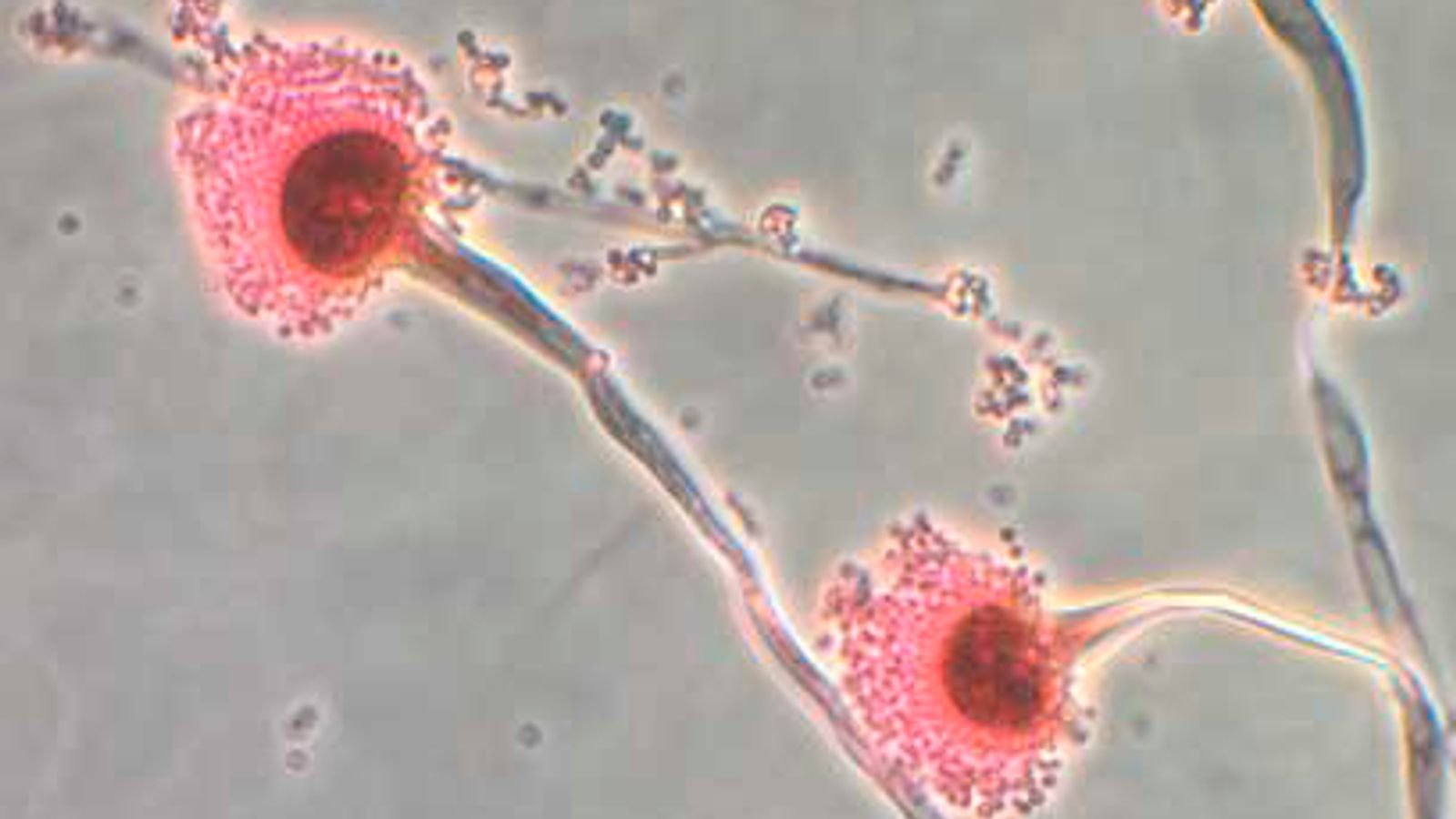
Aspergillus, a type of fungi, is seen in this handout image from the Centres for Disease Control, October 13, 2012. CDC continues to confirm the presence of the fungus Exserohilum in clinical specimens from people with meningitis. At this time, only one clinical specimen has tested positive for the fungus Aspergillus. Pic: Reuters

A killer fungus that infects millions of people a year in hotter climes may soon spread through Europe and into the UK as the world warms further, according to a new study on how climate change spreads disease. The aspergillus species – which can cause deadly human brain infections, spoil livestock, and render crops unsafe to eat – is forecast to spread northwards from Africa and South America into Europe and Asia. How far it spreads will depend on how quickly the world phases out fossil fuels and other drivers of climate change, the paper said, while slow action will put more people at risk. Global warming is also upping the threat from diseases, such as those spread by mosquitoes like malaria and dengue. Fungi are a growing concern but largely unexplored. They live in the air, soil, and inside our bodies and spread through spores in the air we breathe – but more than 90% are estimated still to be unknown to science. Lead author of the new research, Norman van Rhijn from Manchester University, told Sky News they are «extremely difficult» to treat.

Few antifungal medicines exist, while the fungi themselves are increasingly drug-resistant and hard to spot and diagnose. But these organisms are also essential to a healthy ecosystem, decomposing organic matter and helping to suck up climate-heating carbon dioxide.

The study has not yet been peer-reviewed, but is backed by the renowned health institution the Wellcome Trust, which funded the research. Viv Goosens, research manager at Wellcome, said: «Fungal pathogens pose a serious threat to human health by causing infections and disrupting food systems. Climate change will make these risks worse. To address these challenges, we must fill important research gaps.» Professor Dann Mitchell from Bristol University, who was not involved with the study, said fungi are «often overlooked» in comparison with viral, bacterial, or parasitic pathogens, despite being a «crucial part of the picture.» Healthcare systems must be equipped to «recognize and respond to these new threats», as misdiagnosis is common when pathogens appear in unfamiliar regions, he warned.

The scientists looked at the existing habitats suitable for certain types of fungi to grow. They then mapped how those habitats might move or spread under different rates of global warming. In a worst-case scenario, the spread of Aspergillus flavus could increase by about 16%, putting 1 million more people at risk of infection in Europe, damaging the respiratory system, as well as various crops. It is highly virulent, causes severe infections, and is resistant to many antifungals available. And another in the same family, Aspergillus fumigatus, could spread by a further 77%, potentially exposing nine million people in Europe, the research suggested. However, it also found temperatures in Africa could become so high that some fungi would no longer be able to survive on the continent.

SOURCE

Michael Bunting

Por Michael Bunting

“I’m Michael Bunting, Communications Director with over 20 years of experience in corporate reputation, crisis management, and digital strategy. I have led teams in multinational companies and agencies, advised executives, and designed high-impact strategies. I am driven by transparency, innovation, and leveraging communication as a competitive advantage.”

Deja una respuesta

Tu dirección de correo electrónico no será publicada. Los campos obligatorios están marcados con *

You missed

Waspi women’s compensation bid rejected once again following government review | Politics News The government has reaffirmed its denial of the plea from women who asserted they were owed billions after the alteration of their state pension age. The Women Against State Pensions Inequality – Waspi – campaign has been campaigning vigorously, alleging that they were not adequately informed about the increase in the state pension age for women from 60 to 65 to align with men. After dismissing this claim in December 2024, the government initiated a review in November of last year to assess new evidence. The Waspi argument revolves around the assertion that the pension age change was implemented too hastily, leaving some women financially unprepared for the years when they could not claim their state pension. In 2024, the government declared that they would not provide compensation as most women were aware of the impending changes, before announcing the review in late 2025. This review focused on a specific claim regarding the communication of the decision. Work and Pensions Secretary Pat McFadden stated in the House of Commons that following the review, «the government has reached the same conclusion on compensation as…announced in December 2024.» He acknowledged the debate surrounding the increase in the state pension age and the decision made in 2011 to accelerate equalisation. However, Mr. McFadden clarified that the review was specifically about how the changes to the state pension age were communicated, not the policy decision-making process. He admitted that individual letters regarding the changes could have been sent earlier and expressed regret on behalf of the government for the delay in sending those letters. Campaigners are contemplating legal action in response to the government’s decision. Angela Madden, the chair of Waspi, criticized the government’s choice as a «disgraceful political decision» and highlighted the injustice faced by millions of women. She mentioned that Waspi is seeking legal advice, keeping all options open.