

The imposition of President Trump’s tariffs has led to a disruption in the trade rule book, causing a slowdown in economic growth in certain countries, as highlighted by the International Monetary Fund (IMF). However, the IMF does not anticipate a global recession resulting from this upheaval.
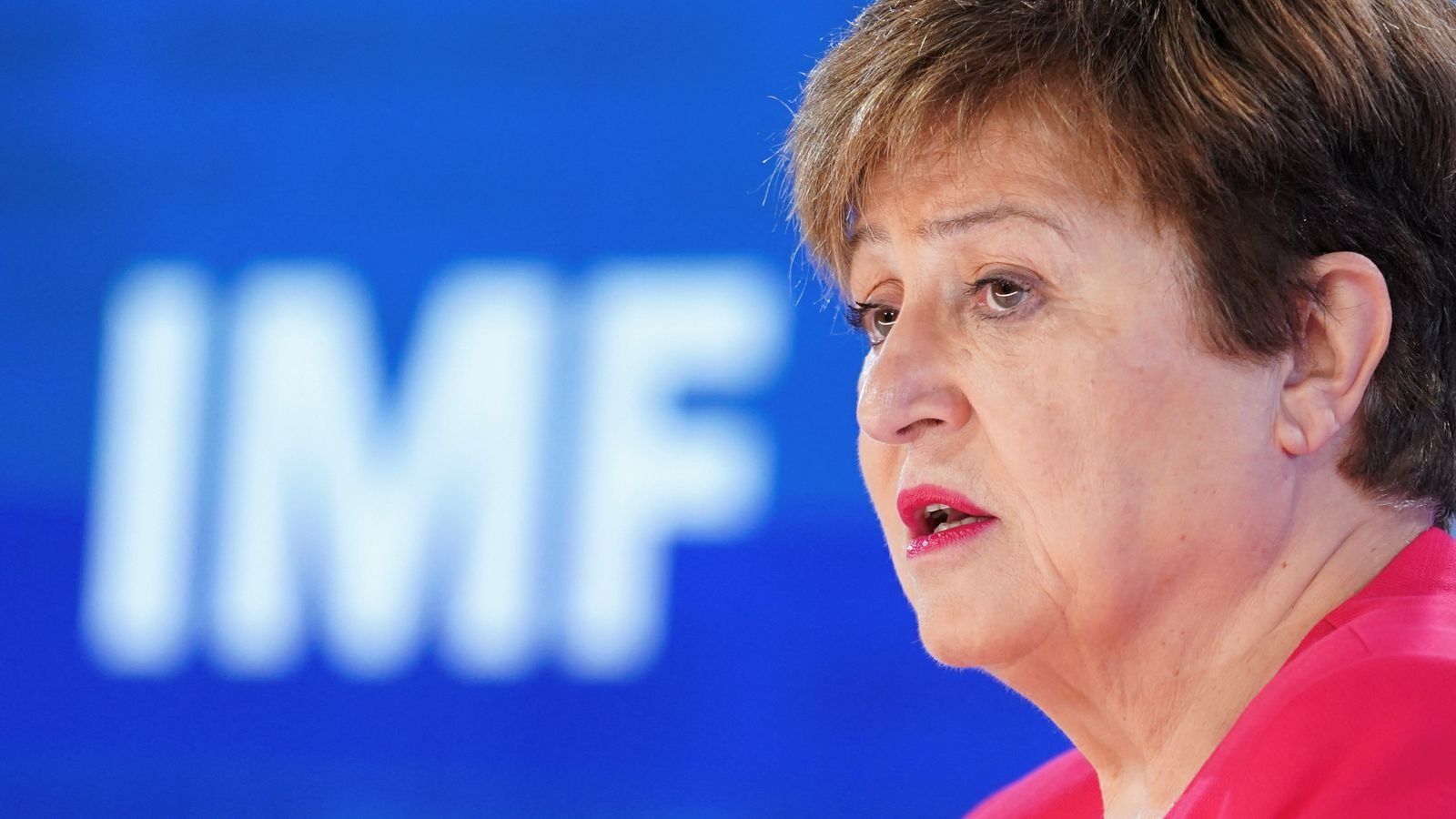
During her opening speech at the IMF’s spring meeting in Washington, managing director Kristalina Georgieva mentioned that there will be significant downgrades in growth projections. Some countries may also experience inflation spikes due to the tariffs imposed by President Trump on imports to the United States. Conversely, the European Central Bank expects less inflation as a consequence of these tariffs.
Money: Chef on a classic he’ll never order
Recently, a flat rate of 10% was imposed on all imports, while additional tariffs from specific countries were temporarily halted for 90 days. Nevertheless, car parts, steel, and aluminum remain subject to a 25% tax upon entering the US.
This situation has led to what Ms. Georgieva referred to as a «reboot of the global trading system,» with trade policy uncertainty reaching unprecedented levels. The unpredictability surrounding the rationale behind specific tariffs, the intermittent application of taxes, and the rapid back-and-forth tariff escalation between the US and China have contributed to uncertainty and turbulence in financial markets.
Ms. Georgieva cautioned that the longer this uncertainty persists, the greater the economic cost. She also highlighted the «unusual» behavior observed in currency and government debt markets, where investors have been divesting from dollars and US government debt, signaling a warning sign for financial conditions.
«Everyone stands to lose if financial conditions deteriorate,» she emphasized.
Read more:
Sainsburys profits top £1bn after closing all cafes and cutting 3,000 jobs
Predators eye bargain deal for struggling discount retailer Poundland
These challenges are exacerbated by a «weaker starting position» characterized by higher public debt levels in recent years due to COVID-19 pandemic spending and elevated interest rates, leading to increased borrowing costs.
Ms. Georgieva attributed the trade tensions to a large extent to an «erosion of trust» among nations.
This erosion, combined with the relocation of jobs overseas and concerns over national security and domestic production, has resulted in a scenario where «industry receives more attention than the service sector,» and «national interests take precedence over global considerations,» she added.